
How to measure clothes: jackets, tops and trousers laid flat
Size labels change between brands and eras. Measurements don't. How to measure a jacket, a shirt and a pair of trousers laid flat, and how to compare with clothes you own.
A size label tells you less than you think. Sizes change between brands, between eras and between a designer's own lines, and second-hand pieces have often been altered, shrunk or stretched. Measurements don't change. This guide shows how to measure clothes laid flat (jackets, shirts, knits and trousers), how to compare the numbers with clothes you already own, and how to read the measurements on a listing.
Before you start
Use a soft tailor's tape, not a ruler. Lay the piece on a table, close it the way it is worn, and smooth out the wrinkles without pulling the fabric. Grailed's size guide makes the same point: the measurements it describes all relate to clothing "laid flat on the ground".
Measure the piece, not your body. A garment needs room to move, so its numbers are always a little bigger than the body inside it. That is why the most useful thing you can do is measure a piece you already own and like the fit of.
Measure a piece you already own. That's your size.
How to measure a jacket, shirt or top
These are the four measurements that matter most for jackets, coats, shirts, knits and tees. The method follows Standard & Strange's guide, which shows each step.
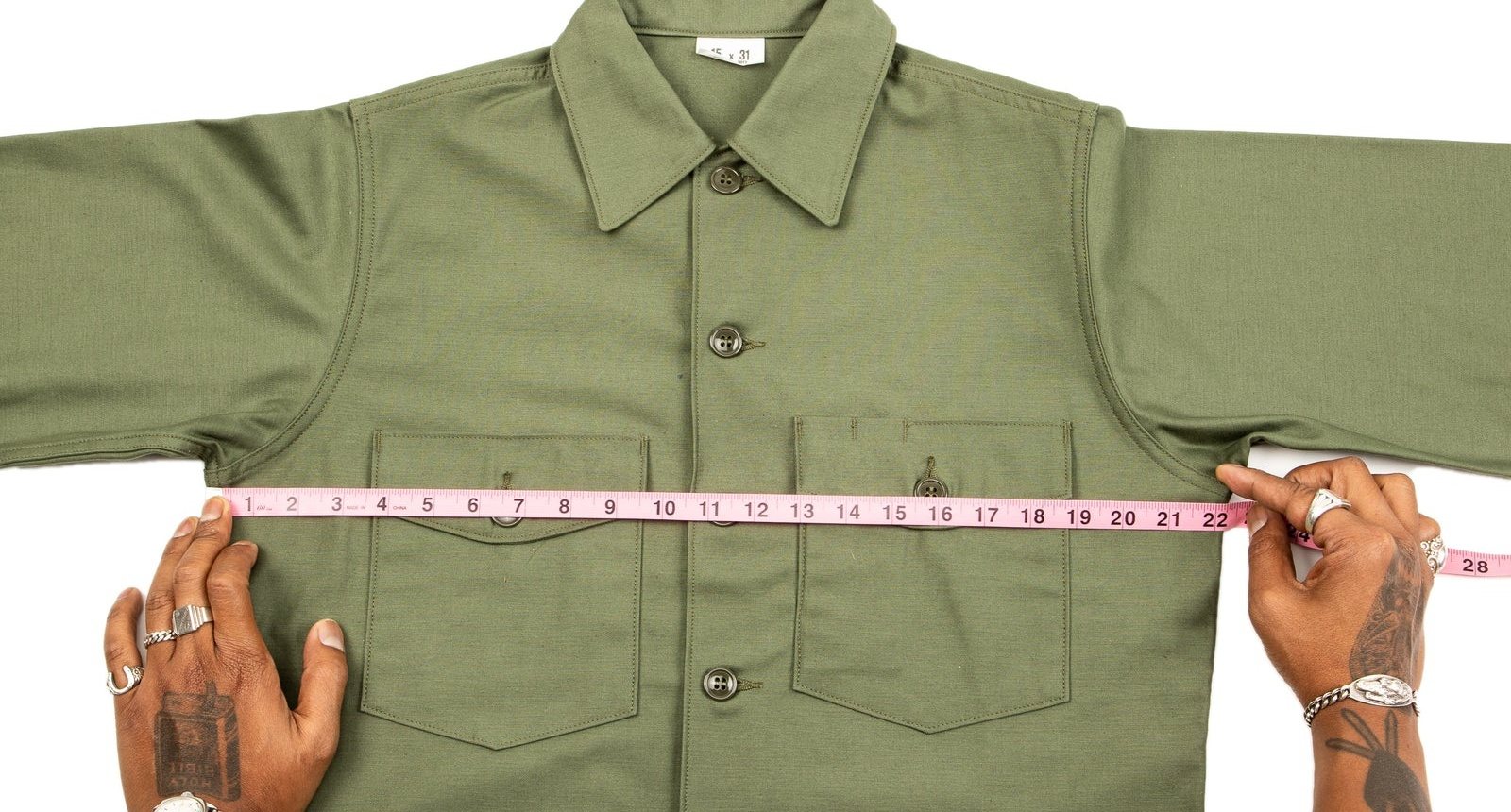
Chest (pit to pit). Close the front and measure straight across, from one armpit to the other. Standard & Strange measures edge to edge rather than seam to seam, because the side seams usually sit slightly towards the front.
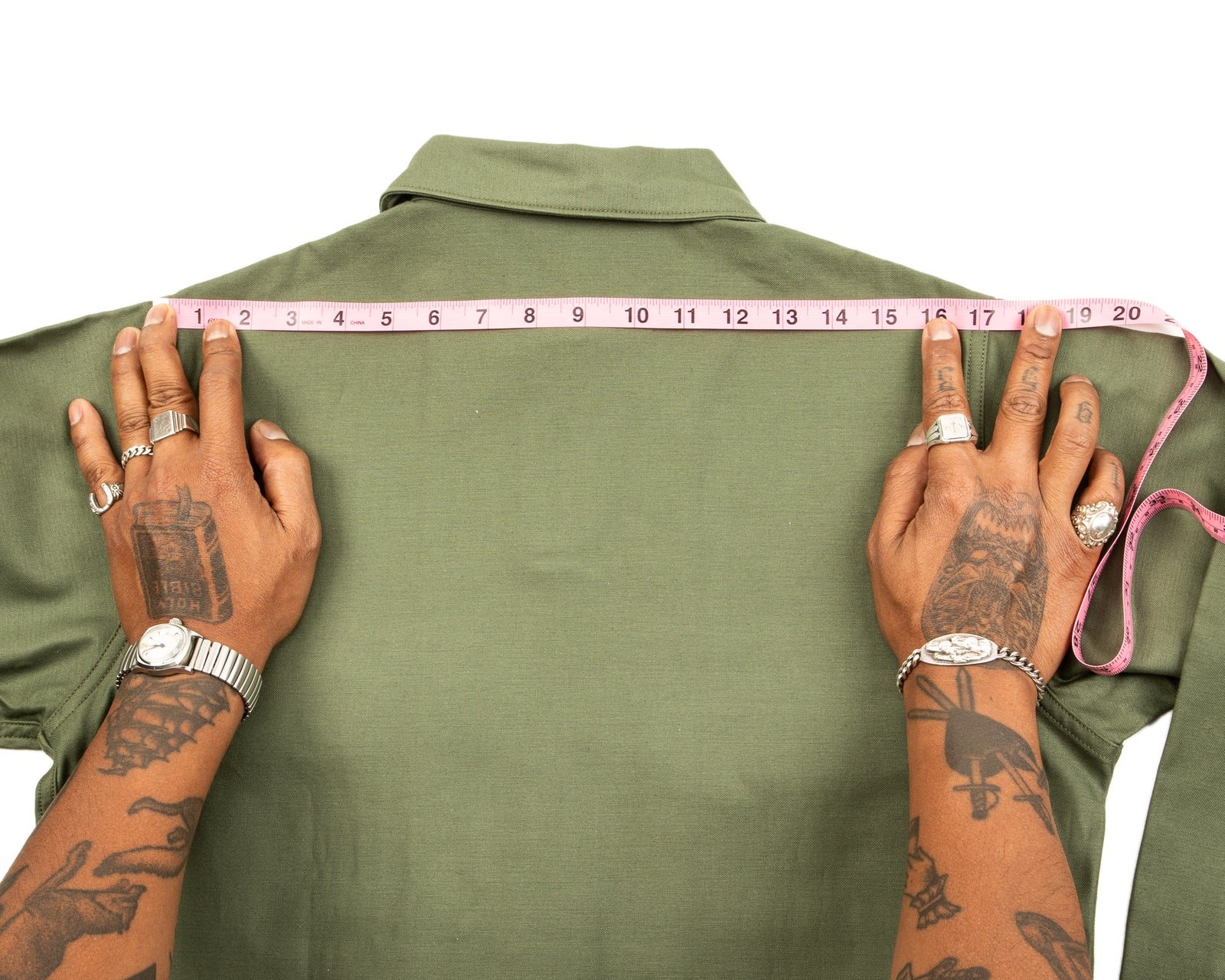
Shoulders. Turn the piece over and measure across the back, from the top of one shoulder seam to the other.
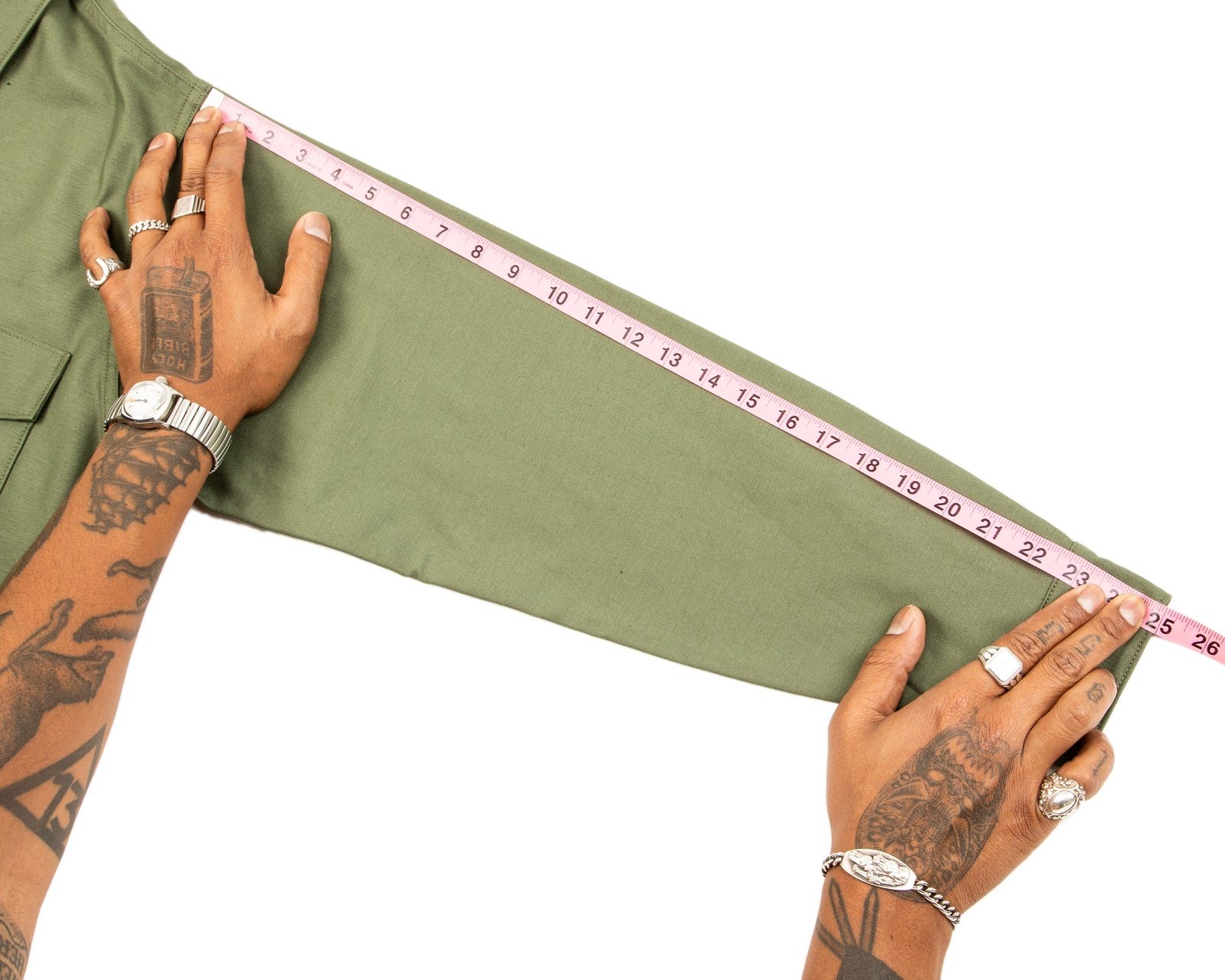
Sleeve. Start at the outer edge of the shoulder seam and follow the top of the sleeve down to the end of the cuff. On a raglan sleeve, which has no shoulder seam, start at the edge of the collar instead.
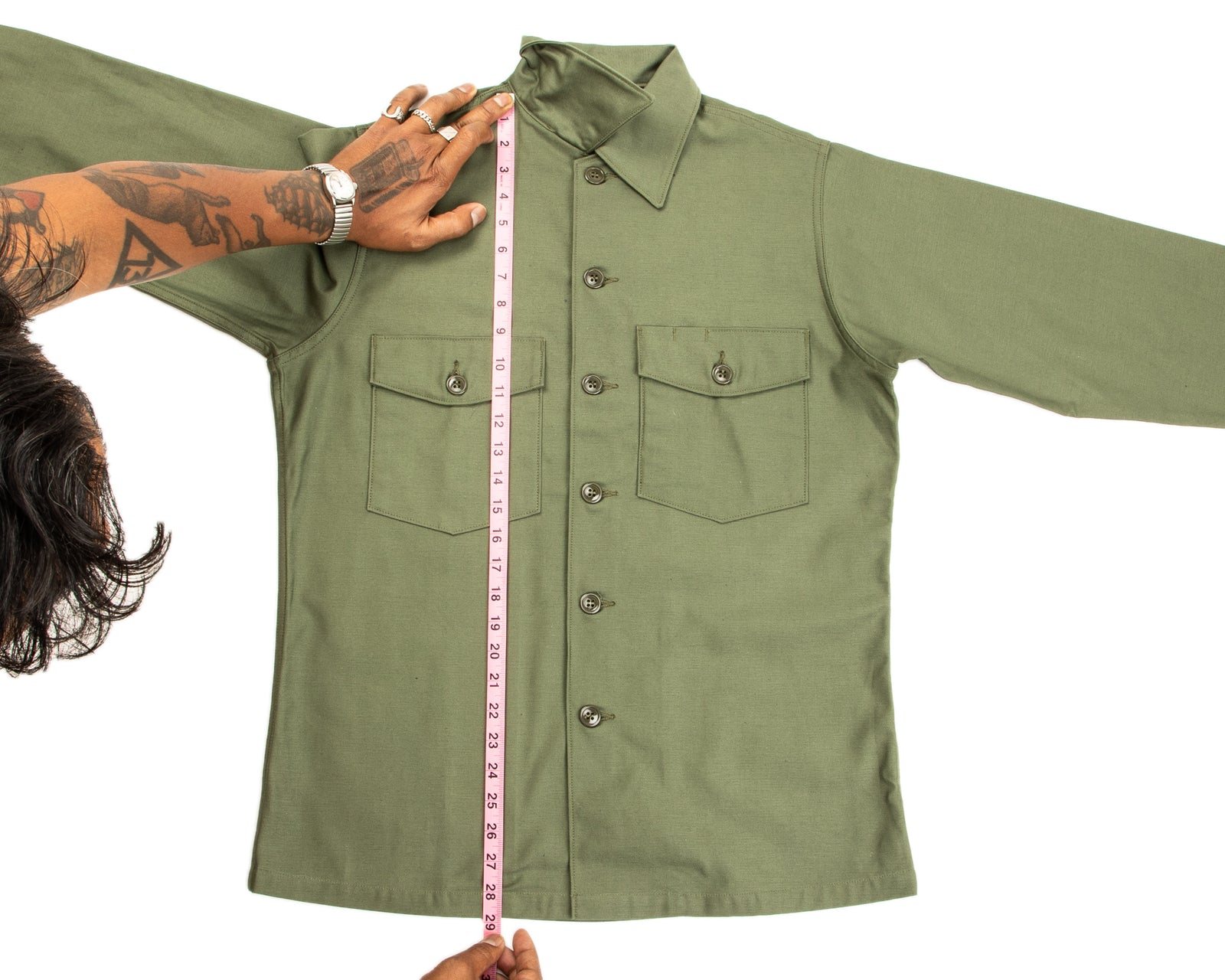
Length. Measure down the front, from where the shoulder seam meets the collar to the bottom of the hem.
How to measure trousers
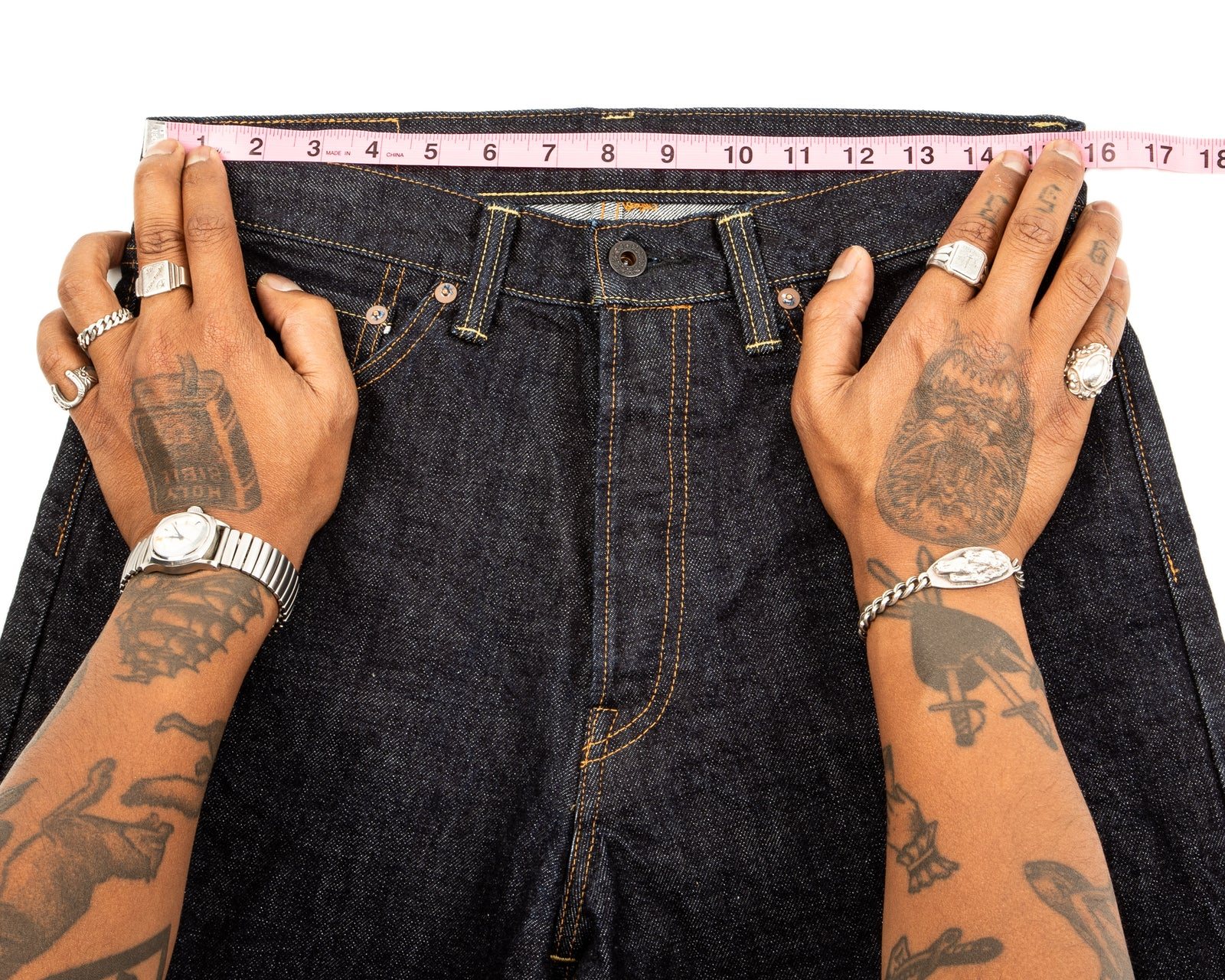
Lay the trousers flat and closed, with the legs together and the front facing up.
Waist. Measure edge to edge across the waistband. Pull it flat, but don't stretch it.
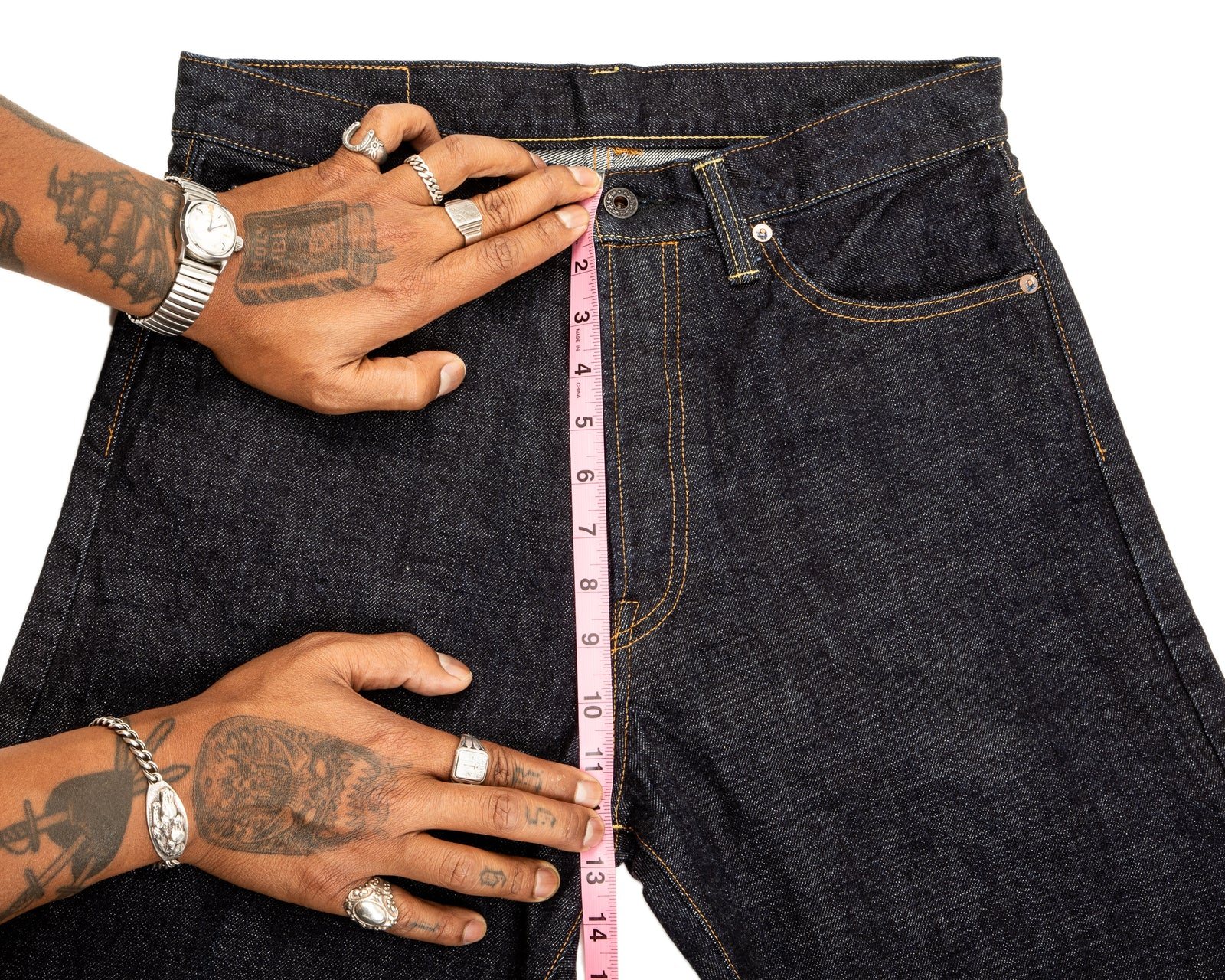
Rise. The front rise runs from the top of the front waistband down to the point at the crotch where the seams meet. The back rise is the same measurement on the back. Rise tells you where the trousers sit: low on the hips or up at the waist.
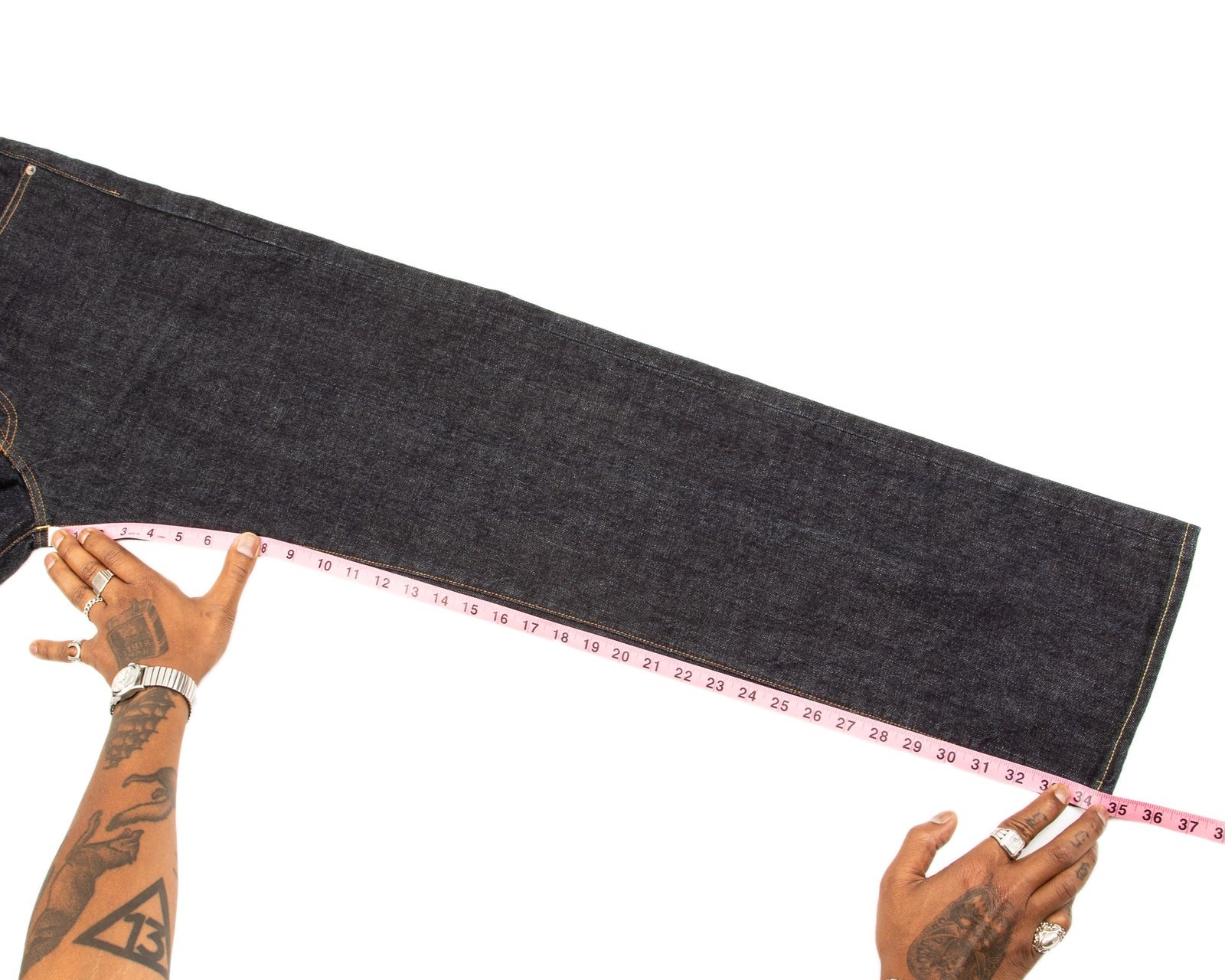
Inseam. Lay one leg flat with the inside seam facing up and measure from the crotch to the hem.
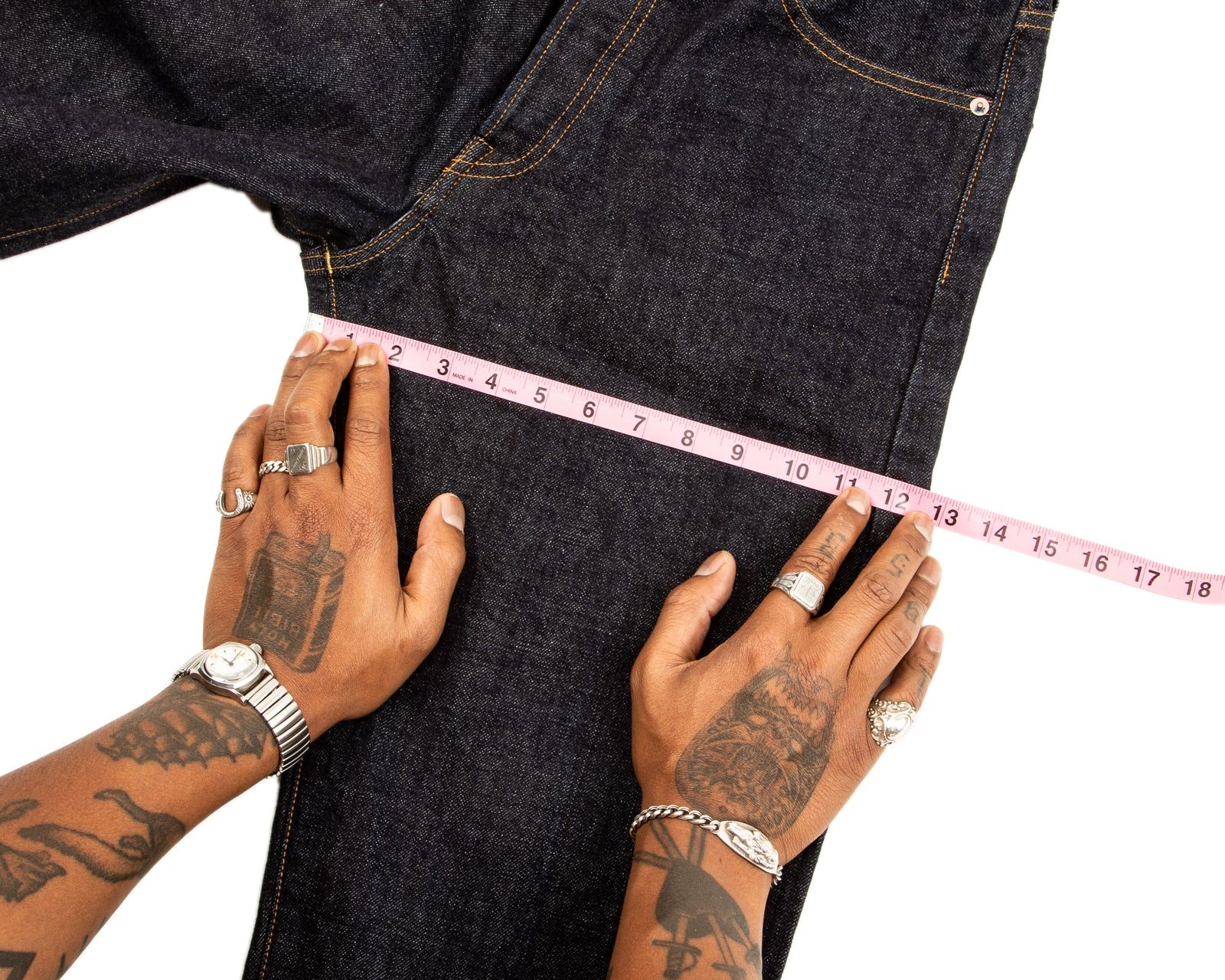
Thigh. Measure straight across the leg, edge to edge, just below the crotch. Standard & Strange measures one inch (2.5 cm) below it.
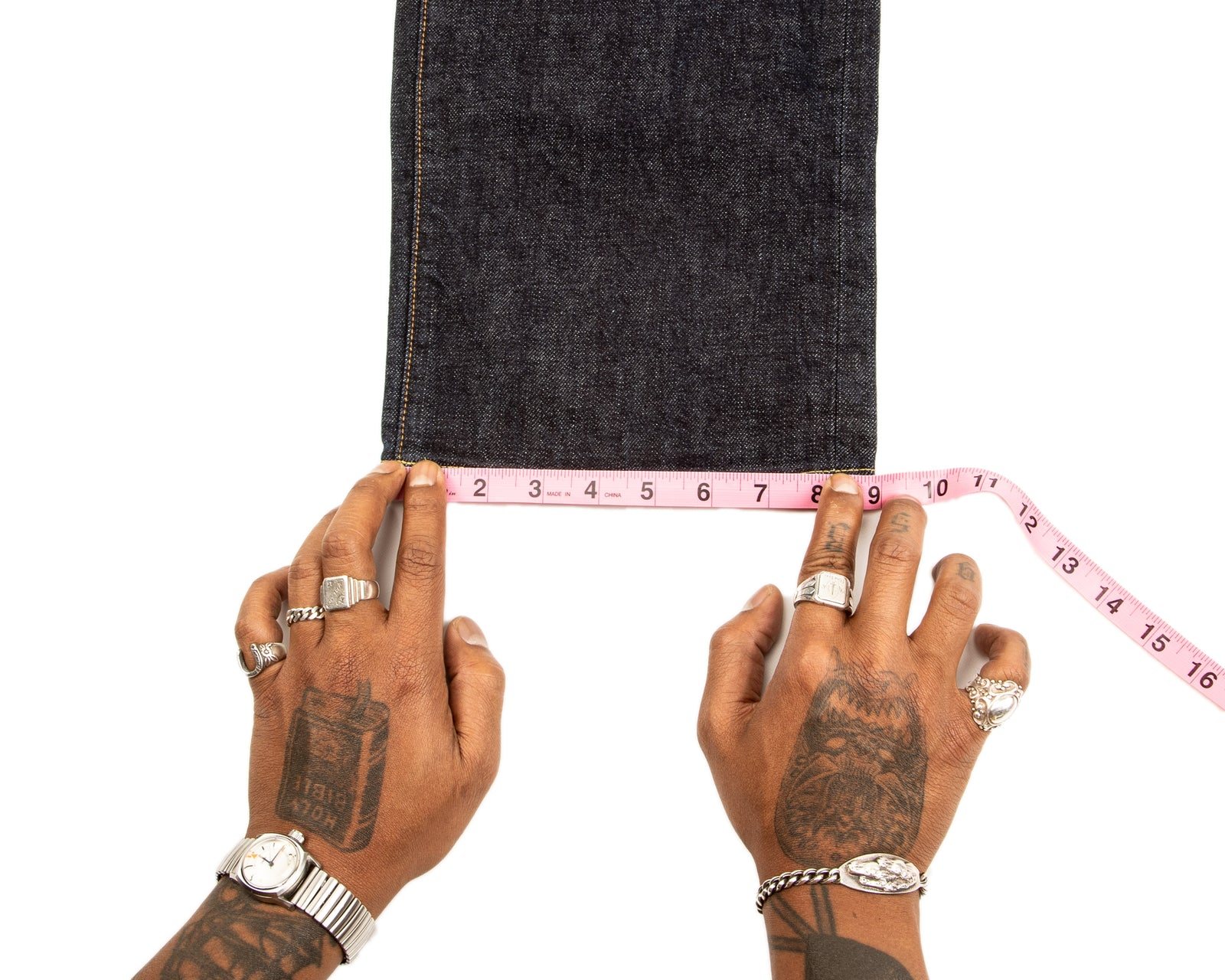
Leg opening. Measure straight across the hem, edge to edge.
Laid flat or all round?
This is where most sizing mistakes happen. A measurement taken flat is one layer of fabric. The all-round measurement, the one a tailor would take, is twice that. Standard & Strange doubles the flat chest and waist to give the all-round number, but gives the leg opening as it is, without doubling.
- A chest of 55 cm laid flat is about 110 cm all round.
- A waist of 40 cm laid flat is about 80 cm all round.
- Shoulders, sleeve, length, rise and inseam are never doubled.
So before you compare, check which kind a seller means. If a listing doesn't say, ask.
How to compare with clothes you own
Take a piece with a fit you like, of the same kind (a jacket for a jacket, trousers for trousers), measure it the same way, and put the numbers side by side. Grailed suggests staying close to your own measurements for fitted pieces, allowing a couple of centimetres more across the chest for an oversized fit, and a centimetre or two more in the sleeve for movement.
Look at the measurements that can't be fixed first. A tailor can shorten a sleeve or a hem, but can do little about shoulders or a chest that is too narrow. Designers' cuts vary a great deal, and archive pieces often fit differently from today's, so compare against the numbers rather than the size label.
Reading measurements on devines
On our product pages the measurements are given laid flat, in centimetres, with a switch to inches. Where we can, we show a small sketch of the piece with each measurement drawn where it is taken. Lay a piece you own flat, measure it the same way, and compare.
If a measurement you need is missing, use "Ask for measurements" or send us a message in the chat, and we measure the piece for you. Because everything is pre-owned, sales are final, including for fit, when the measurements match the listing. So if you are not sure about a size, ask us before you buy. For shoes and boots, see our guides to Margiela Tabi boots, Guidi sizing and Ann Demeulemeester boots.
Sources
Last updated 15 November 2026. Spotted a mistake? Tell us.
Keep reading
 Guide Junya Watanabe // 4 min read
Junya Watanabe: history, MAN vs women's and the label
Junya Watanabe explained: from Comme des Garçons pattern cutter to his own label, women's vs MAN, key collections, collaborations and how to read the label.
 Story Dior // 4 min read
Dior Homme jeans: Hedi Slimane's 21, 19 and 17 cm cuts
Dior Homme jeans by Hedi Slimane: what the 21, 19 and 17 cm cuts mean, the seasons from 2003 to 2007, who wore them and how to date a pair from the label.
 Story Number (N)ine // 4 min read
Number (N)ine and Kurt Cobain: the striped mohair sweater
How Kurt Cobain's £35 striped mohair jumper from a Belfast gig became Number (N)ine's AW03 Kurt Cobain sweater, and what Miyashita took from Nirvana.