
Journal Guides Maison Margiela
Margiela Tabi boots: history, sizing and how to spot a fake
The split-toe boot Margiela first showed in 1988, and one of the most copied shoes in fashion. Where it came from, how it fits, and how to check a pair.
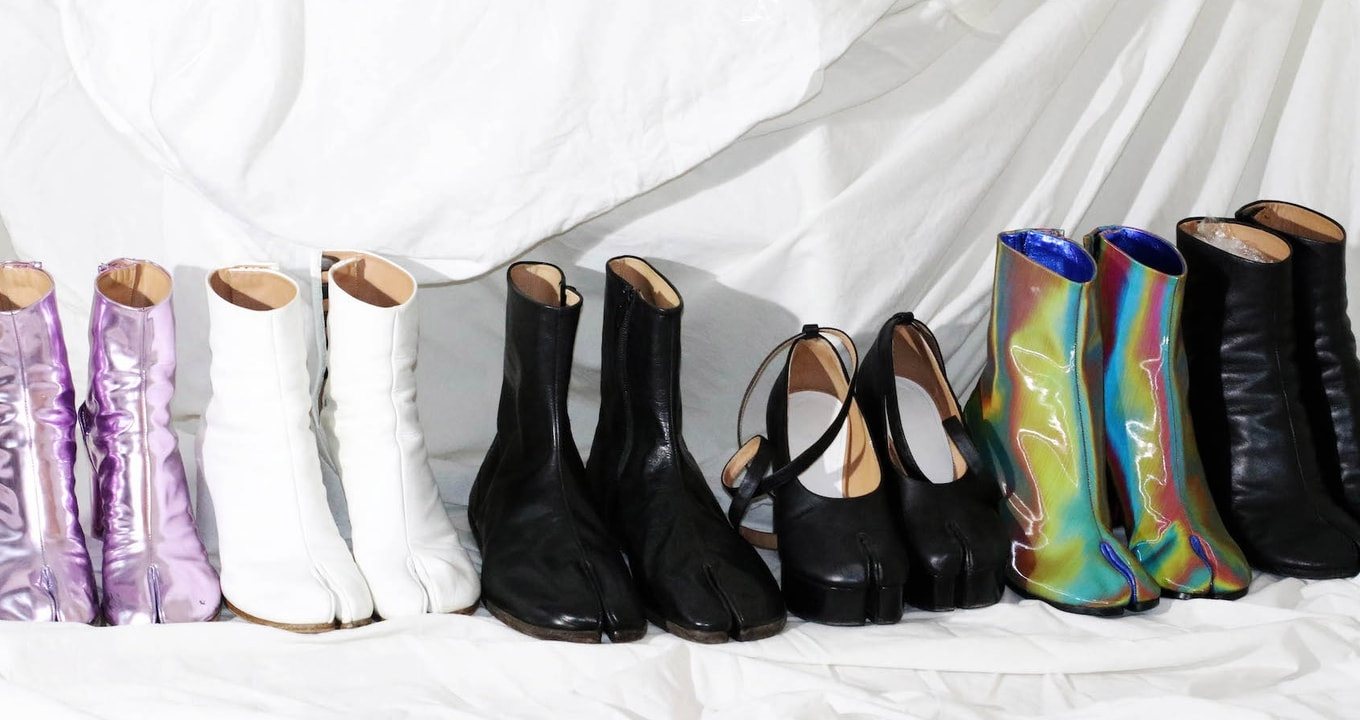
The Margiela Tabi boot is the split-toe boot on a round block heel that has walked out of Margiela shows since 1988. For most of its life it was a shoe for people who already knew. Today it is one of the most copied shoes in fashion. This guide covers where the Tabi boot comes from, how Tabi boots fit, and what a real pair shows, part by part, with photos of pairs from our own shop.
Where the Tabi boot comes from
Tabi are Japanese split-toe socks. At the turn of the 20th century they became a work boot: Highsnobiety credits Shojiro Ishibashi, the founder of Bridgestone, with inventing the rubber-soled jika-tabi. Margiela put the split toe on a heeled leather boot for his first show, held in Paris in 1988 for spring/summer 1989. Highsnobiety describes "paint-doused models" leaving "tracks of cleft footprints" down the runway.
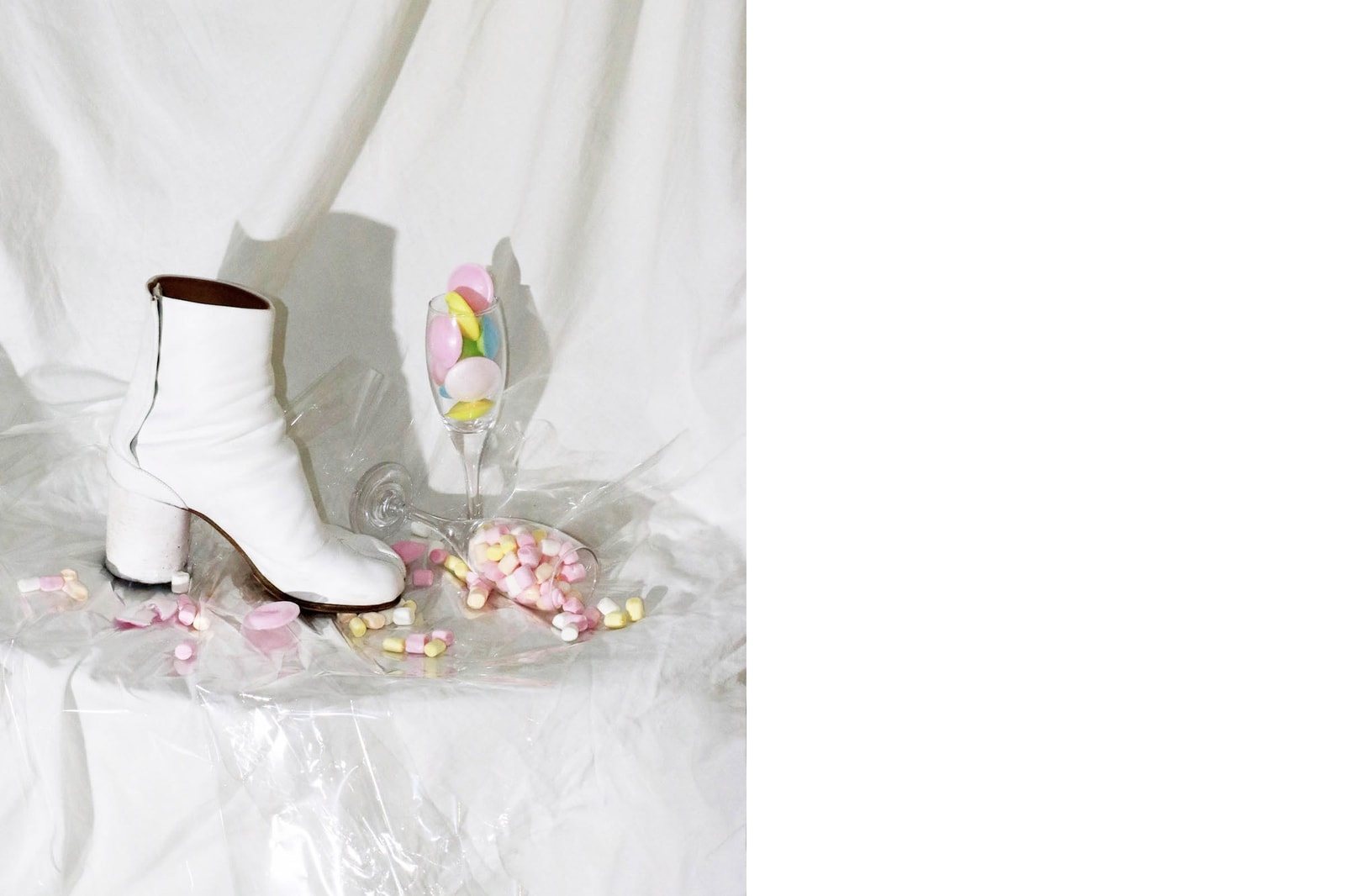
The boot began as a women's shoe. According to Highsnobiety, Geert Bruloot, the first buyer to stock it, remembered Margiela saying there was "no budget" for another shoe, and Margiela repainted his first season's unsold Tabis with wall paint to give them a new look. The house did not release a men's version until 2017.
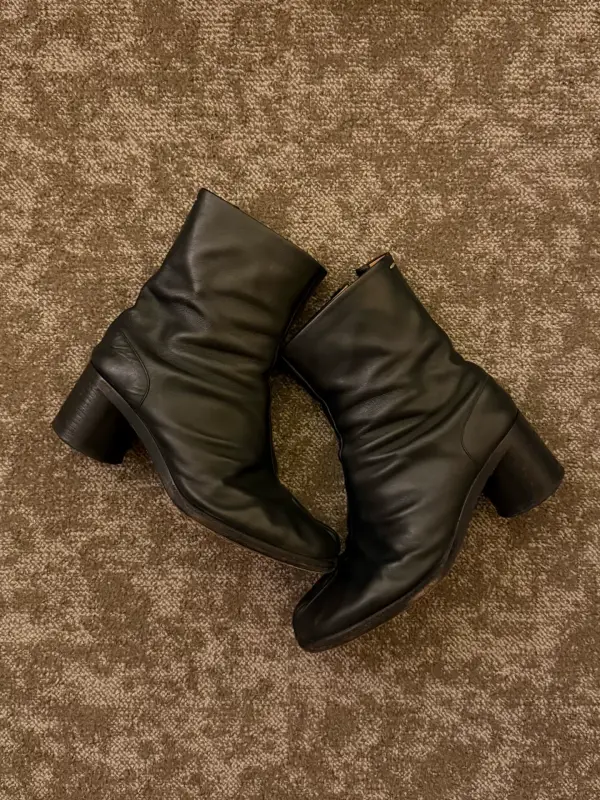
The classic Tabi boot stands on a wide cylindrical heel, which the house describes as matching the width of a human heel. The same split toe now appears on ballerinas, Mary Janes, loafers and sneakers, but the boot is where it started.
How do Tabi boots fit?
Tabi use European sizes, and the retailers' advice for the boot comes close to one answer:
- Regular size. Farfetch calls its Tabi ankle boots true to size: take your usual size "unless you have wide feet, in which case we recommend going up half a size".
- Not smaller. Feuille says Tabis "generally fit true to size" and that "sizing down is generally not recommended", because a smaller size can make the split toe feel tight.
- Thick socks. Feuille also suggests half a size up if you plan to wear thicker socks with boots.
- Break-in. The leather feels firm at first and then follows the foot. Feuille says it softens "without dramatically stretching".
In its note on the heeled ballerina, Farfetch adds that Tabi "are meant to be worn like a second skin so they should feel snug". With a second-hand pair, check the size on the sole and ask for the inside length of the insole.
Why there are so many copies
The split toe comes from the Japanese sock, so a split-toe boot from another maker is not a fake in itself. It becomes one when it carries Margiela's markings.
Those copies are now everywhere. In November 2024 nss magazine described resale platforms full of Tabi lookalikes at about €250 a pair, against about €800 for the real shoe, and far cheaper versions on Shein, Temu and AliExpress. It also described copies made without any logo at all.

The sole
Start underneath. On a leather sole the markings are stamped into the leather near the heel. The numbers 0 to 23 run in three rows: 0 to 9, 10 to 16 and 17 to 23. One number is circled, and on shoes it is 22, the number of the house's shoe line. Below come the house name with PARIS under it, the size, and the words VERO CUOIO and MADE IN ITALY.
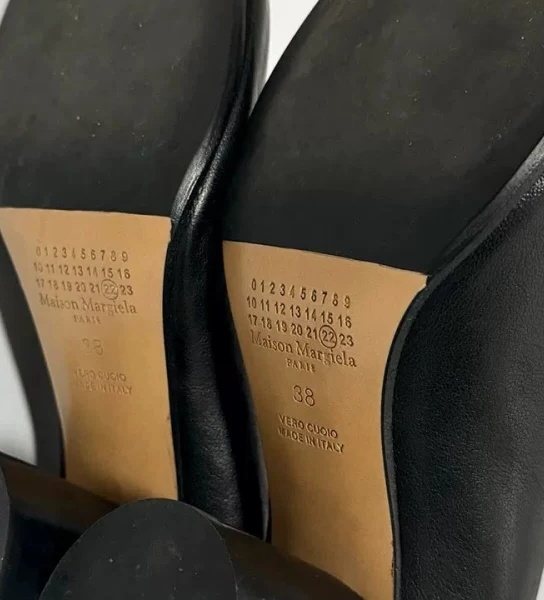
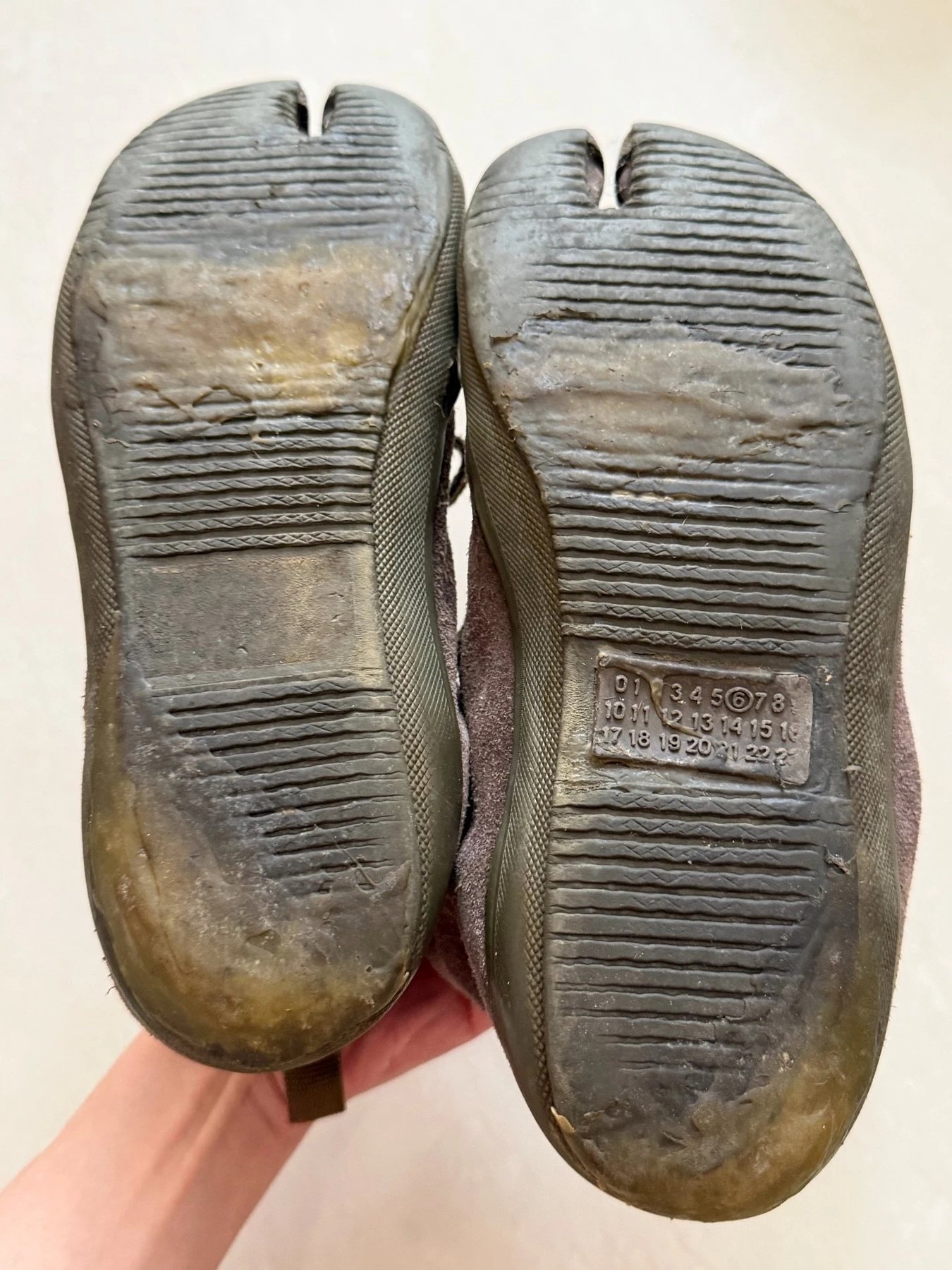
Rubber-soled styles carry the same grid of numbers moulded into a small panel. On both kinds the rows should be straight and the numbers evenly spaced. A circled number other than 22 does not belong on a shoe.
On a shoe, the circled number is 22.
The name
The house was called Maison Martin Margiela until it dropped "Martin" at the time of John Galliano's arrival, announced in October 2014. Older pairs carry the long name and newer pairs the short one, on the sole, the insole and the box alike. The name should fit the age the seller gives for the pair, and it should be the same in all three places.
The insole
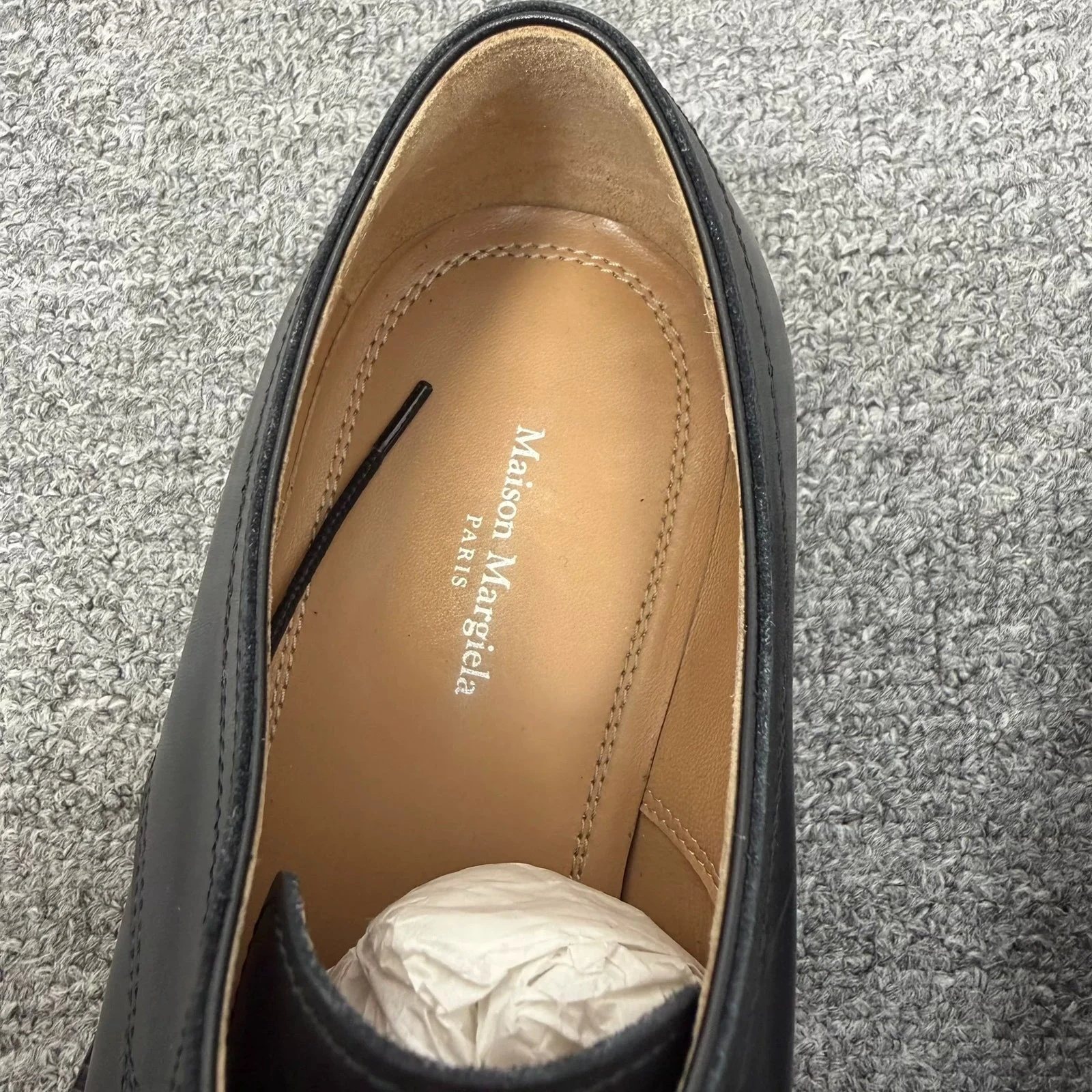
Inside, the house name is printed on the insole with PARIS beneath it in small capitals. The letters are fine and evenly spaced. Compare the print with a pair you know to be real: the typeface is easy to get slightly wrong.
The toe
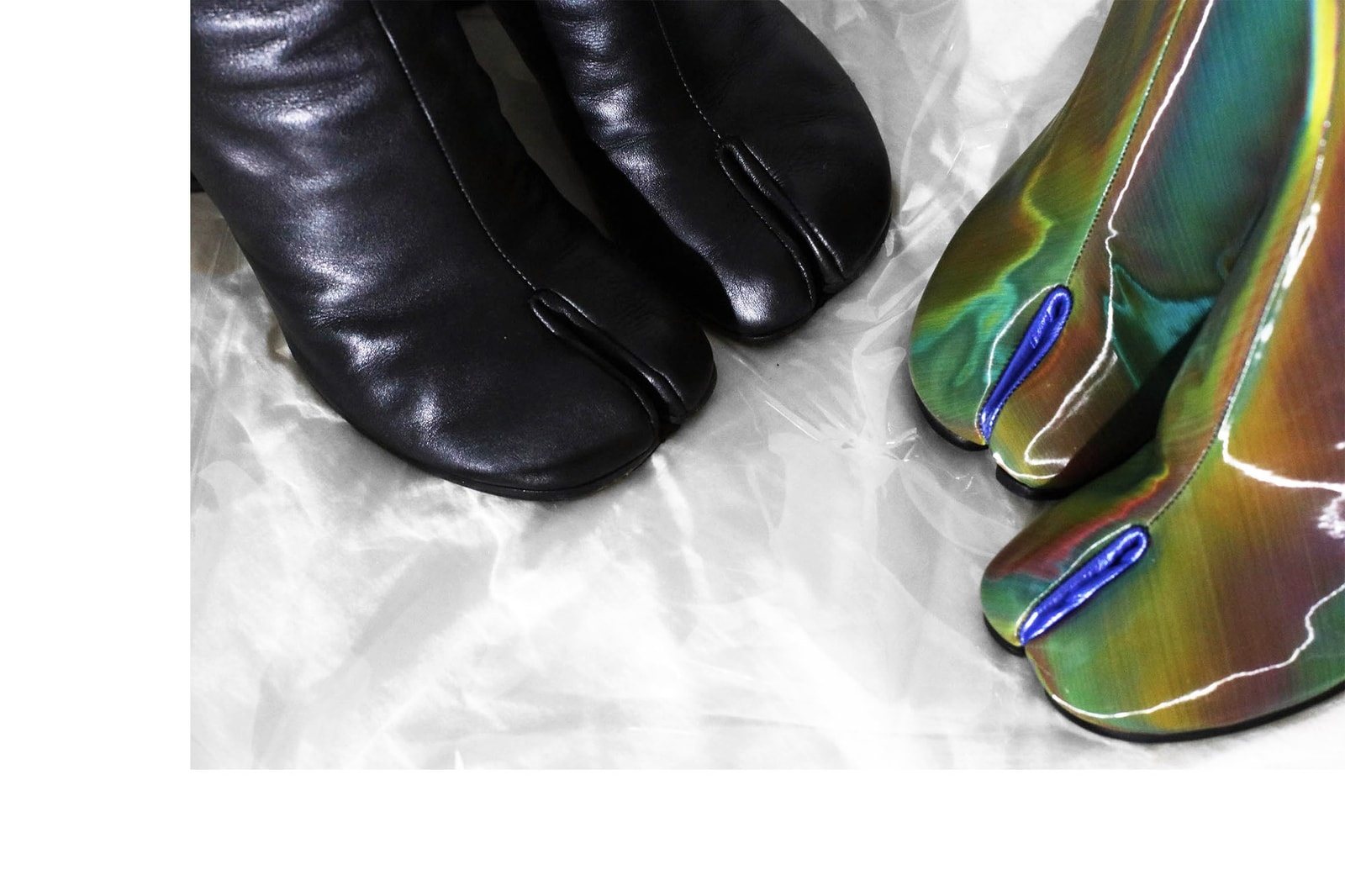
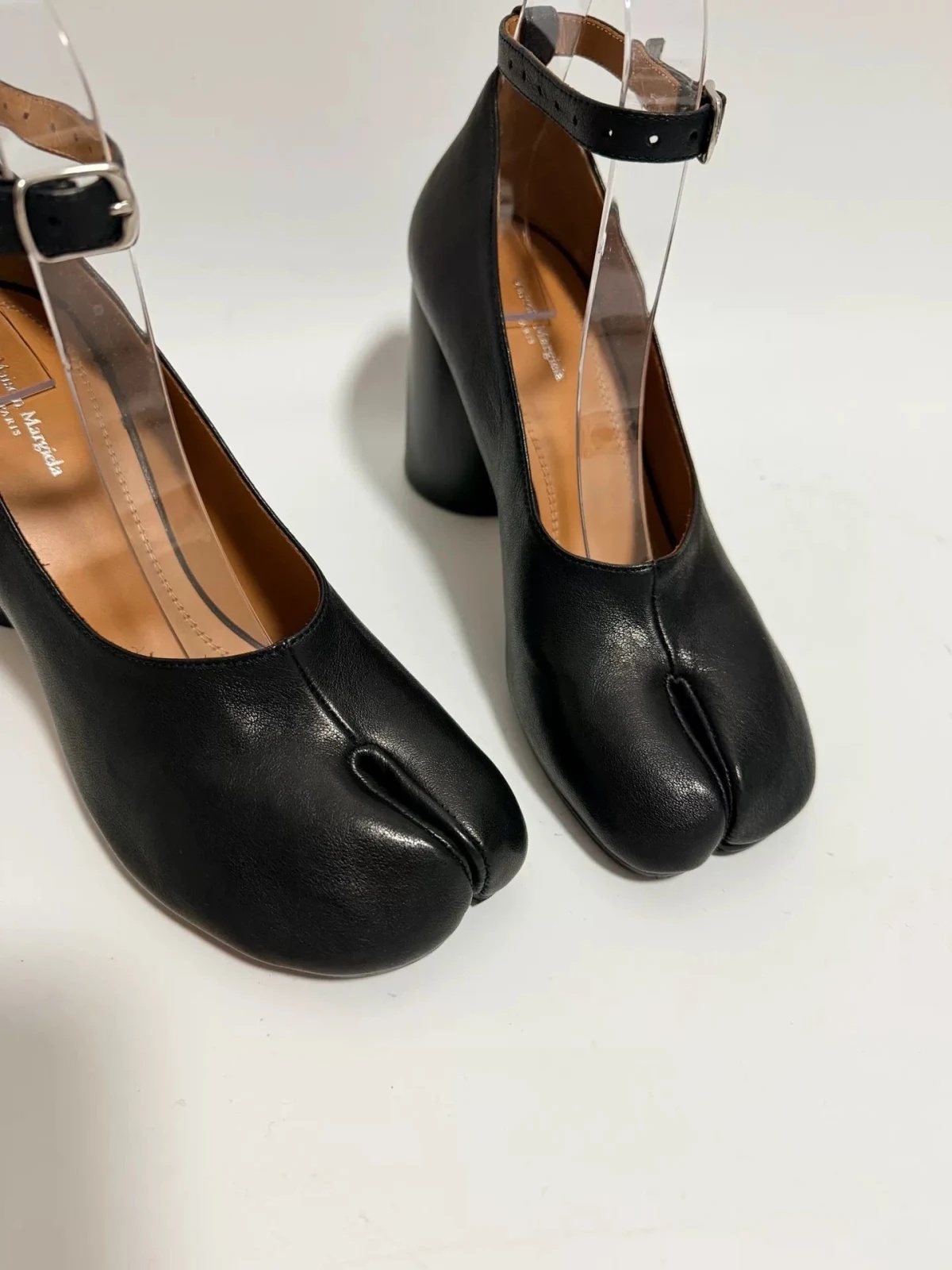
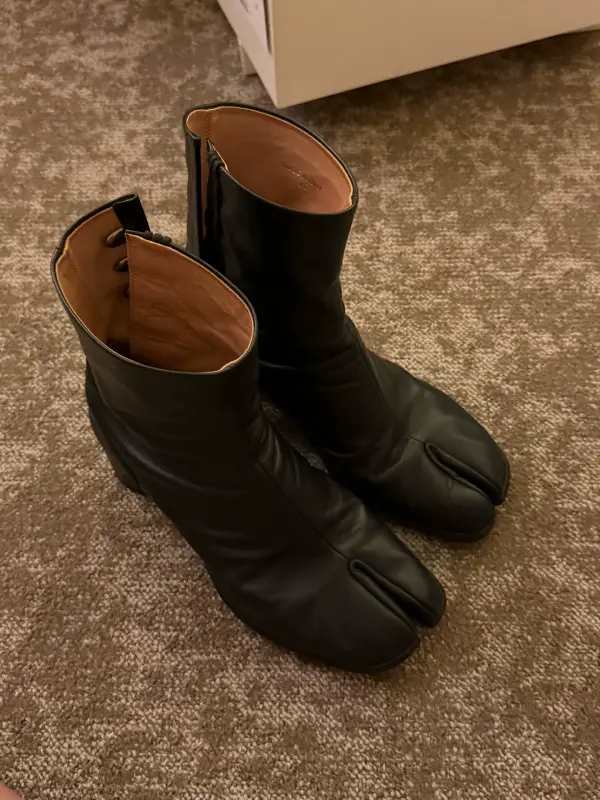
The split is the whole point of the shoe, and it is where rough work shows first. On a real pair the cleft is a clean seam that sits in the same place on both shoes, and the two halves of the toe are full and rounded. Compare the shape with photos of the same model, because the toe differs between the boot, the ballerina, the loafer and the sneaker.
The heel
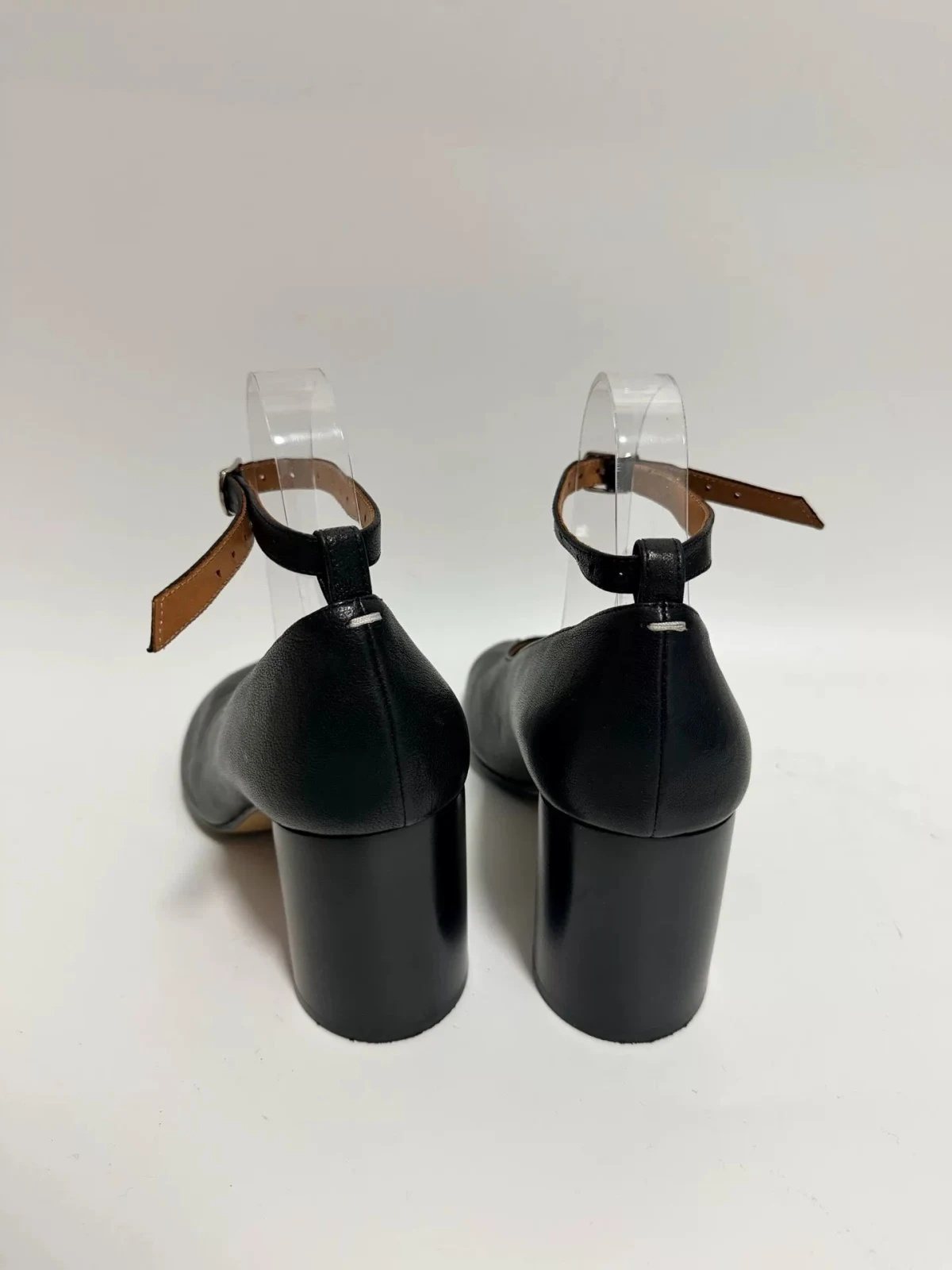
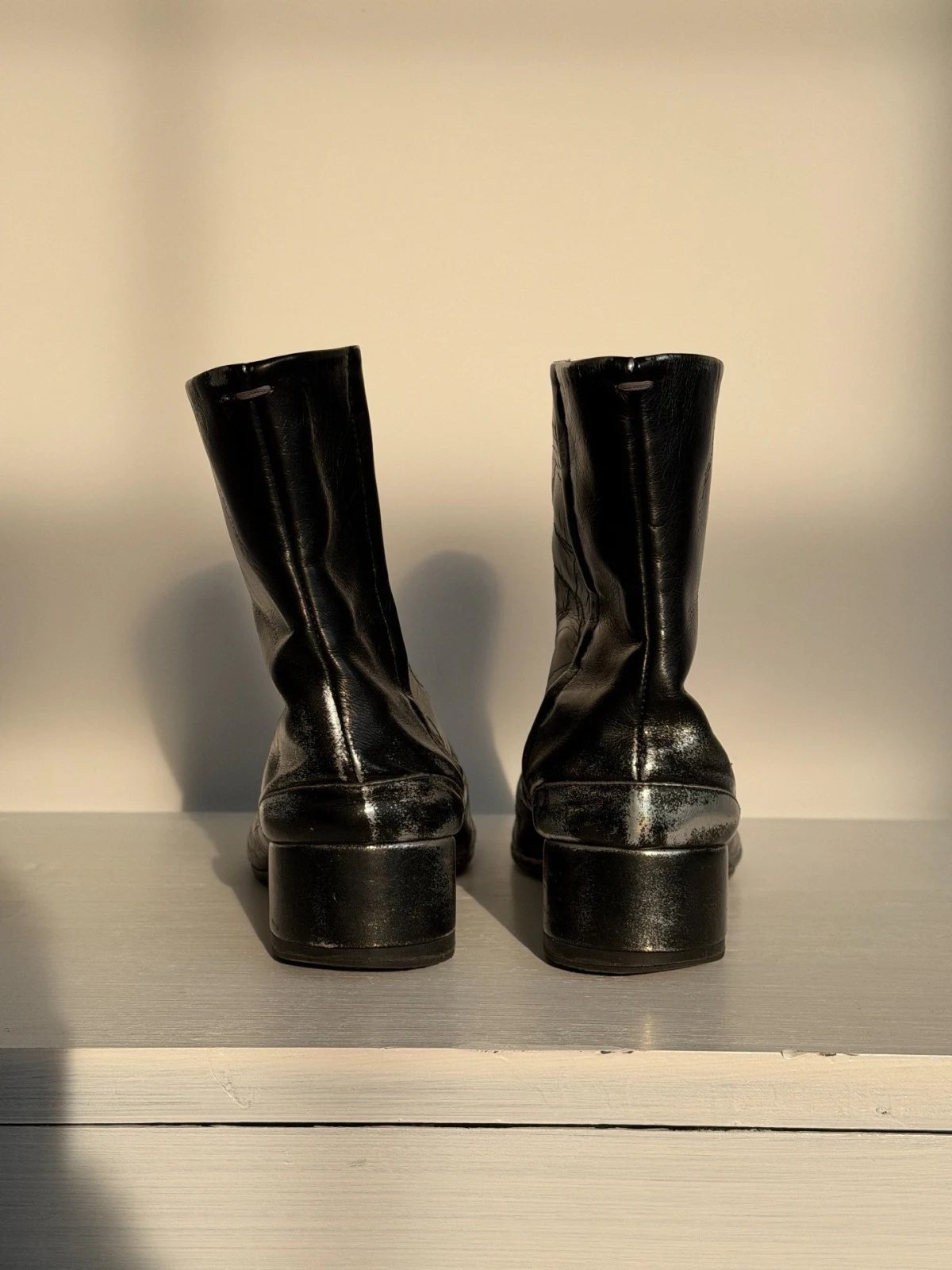
At the back of each shoe, at the top of the heel, sits one short white stitch. It is the shoe's version of the four white stitches that hold the label on Margiela clothes. It should be in the same place on both shoes.
The box and the codes
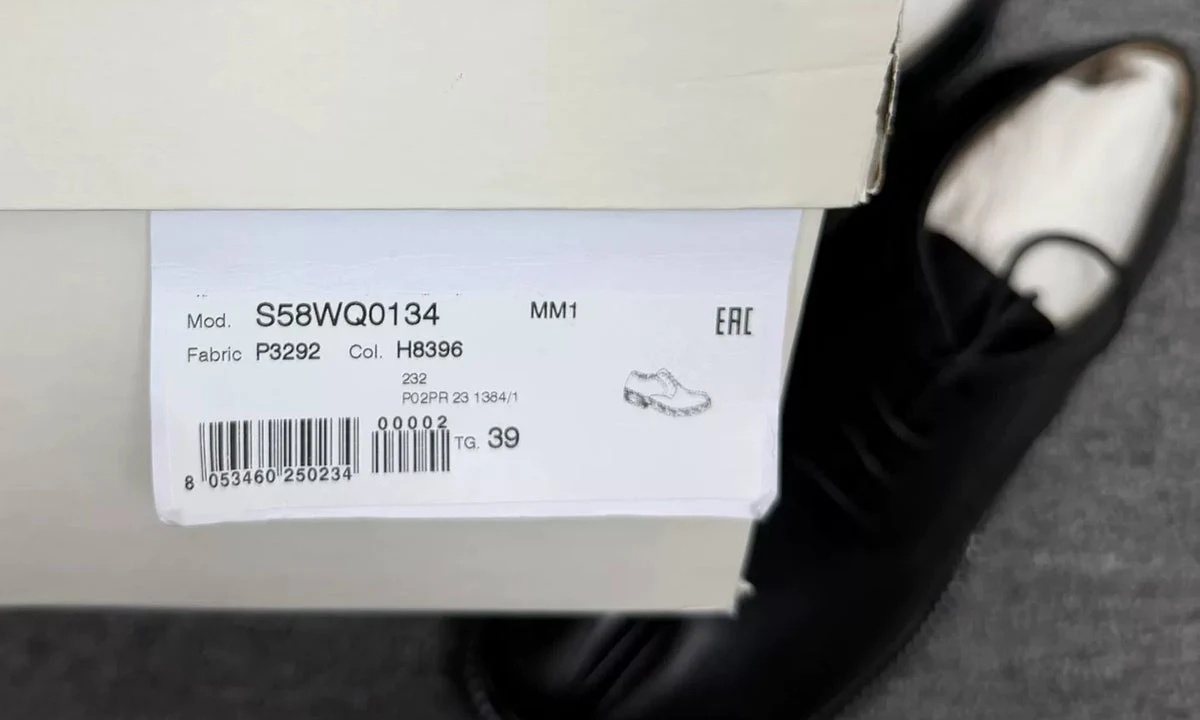
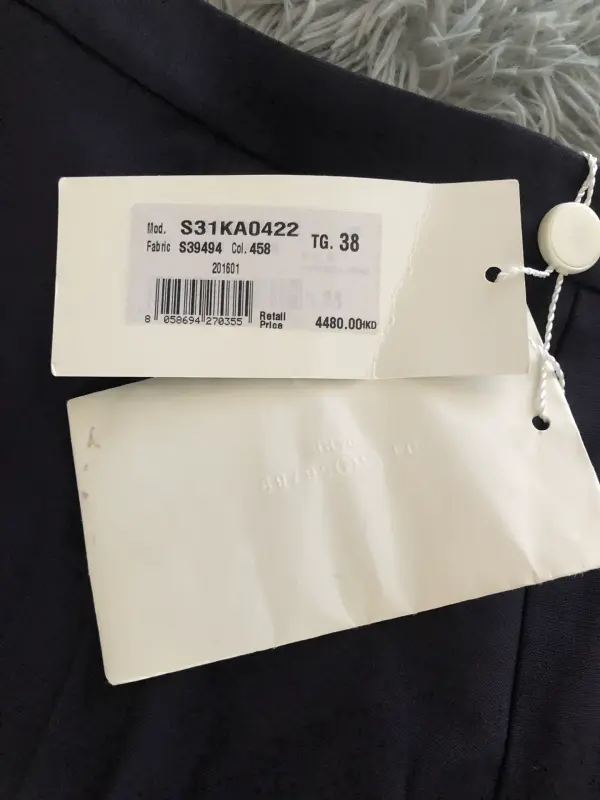
On the recent pairs we have handled the box is plain white. The label on its end gives a model code, a fabric code, a colour code and the size, marked TG. A model code and the size are also stamped inside the shoe, on the lining. The two should agree, and the drawing on the label should be of the shoe in the box.
Recent pairs may also come with a digital certificate read from a chip in the shoe. Pairs from before the chips were introduced have none, and a chip can be damaged, so treat a certificate as support and its absence on an older pair as normal.
Signs to slow down
- The price is far below what the model sells for elsewhere.
- The seller shows no photo of the sole, the insole or the back of the heel, and will not send one.
- The numbers on the sole are blurred, uneven or out of line, or the wrong number is circled.
- The name on the sole, the insole and the box do not match each other, or do not fit the age of the pair.
- The split toe, the heel or the sole look different from other pairs of the same model.
What a checklist cannot do
Every marking on this page can be copied, and the better copies do copy them. A pair that passes all of these points is more likely to be real. It is not proved real. None of the signs above is a verdict on its own either: soles wear, stamps fade and boxes get lost.
What settles it is the whole shoe looked at together, next to pairs that are known to be real. That is the check we do on every pair before it ships. If you are unsure about a pair you have seen, in our shop or anywhere else, send us the photos in the chat.
Maison Margiela in the shop now
Sources
- nss magazine: Margiela's tabi time has come (November 2024)
- Vereev: Maison Margiela authentication notes (Tabi, Replica, 5AC)
- Maison Margiela: Tabi boots
- Wikipedia: Maison Margiela
- Highsnobiety: the history of the tabi shoe
- Hypebae: the history of the Maison Margiela Tabi boot (October 2019)
- Farfetch: Maison Margiela Tabi size guide
- Feuille: Maison Margiela Tabi sizing guide (July 2026)
Last updated 15 November 2026. Spotted a mistake? Tell us.
Keep reading
 Guide Junya Watanabe // 4 min read
Junya Watanabe: history, MAN vs women's and the label
Junya Watanabe explained: from Comme des Garçons pattern cutter to his own label, women's vs MAN, key collections, collaborations and how to read the label.
 Story Dior // 4 min read
Dior Homme jeans: Hedi Slimane's 21, 19 and 17 cm cuts
Dior Homme jeans by Hedi Slimane: what the 21, 19 and 17 cm cuts mean, the seasons from 2003 to 2007, who wore them and how to date a pair from the label.
 Story Number (N)ine // 4 min read
Number (N)ine and Kurt Cobain: the striped mohair sweater
How Kurt Cobain's £35 striped mohair jumper from a Belfast gig became Number (N)ine's AW03 Kurt Cobain sweater, and what Miyashita took from Nirvana.