
Journal Collections Undercover
Undercover Scab, spring/summer 2003: the collection that took Jun Takahashi to Paris
Torn, patched and stitched by hand, with a finale in burqas: Undercover's first Paris show in October 2002, and how to find a piece from it today.
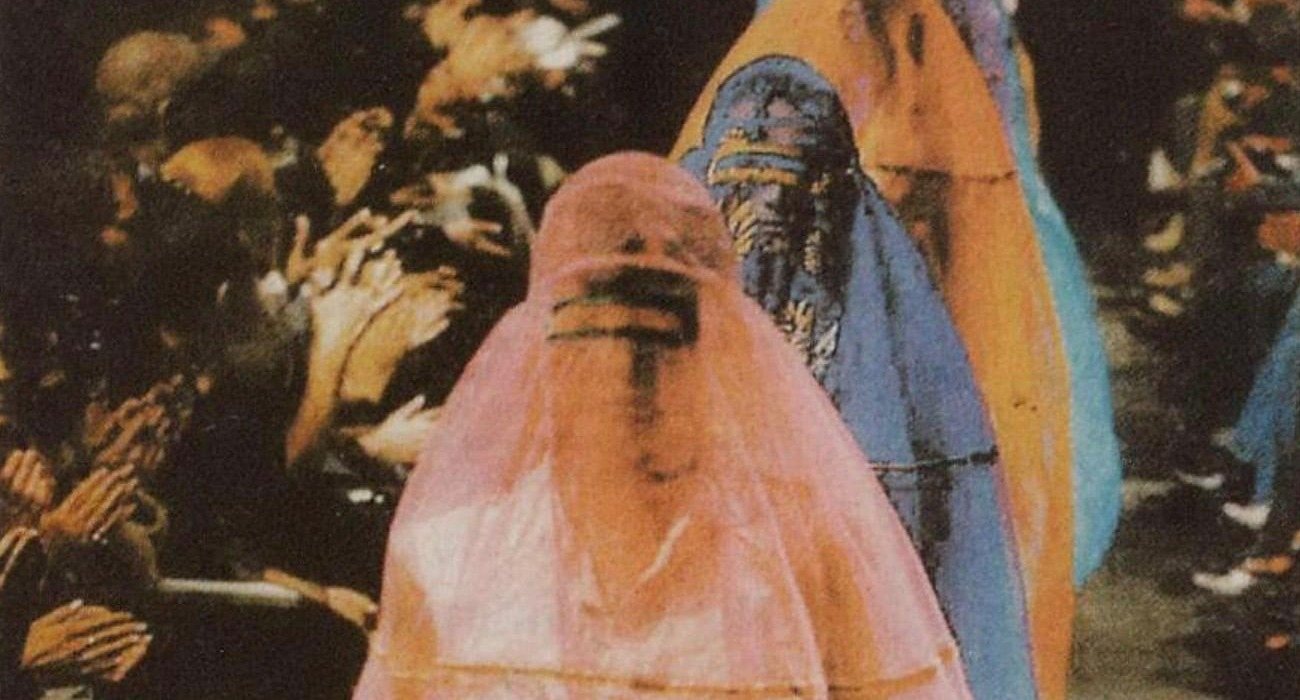
In October 2002 a designer most of Paris had never seen opened the ready-to-wear week with a show of torn, patched and hand-stitched clothes, and ended it with a line of models in brightly coloured burqas. Jun Takahashi called the collection Scab. More than twenty years on it is still the collection that every other Undercover season gets measured against, and the one collectors hunt hardest.
Before Paris
Takahashi was born in Kiryu in 1969 and enrolled at Bunka College of Fashion in 1988. He sang in a punk band, Tokyo Sex Pistols, and started Undercover with a classmate, Hinori Ichinose, around 1990. He has said he cannot remember whether it was 1989 or 1990. The first pieces were mostly T-shirts and customised vintage clothes with studs and patches, sold in Harajuku shops.
He staged his first women's runway show in Japan in 1994. Rei Kawakubo of Comme des Garçons took notice and became a friend and supporter. With her encouragement, he took Undercover to Paris.
The show
Takahashi was 33. The show was held in the grand hall of the Union Centrale des Arts Décoratifs, and the next morning Hilary Alexander called it "a bizarre curtain-raiser" to the Paris collections. Her review gives a good picture of the room. Models with strings of beads across their faces walked a black catwalk in open-toed tribal boots, to rock'n'roll and rhythm and blues mixed with the voice of Takahashi's seven-month-old daughter.
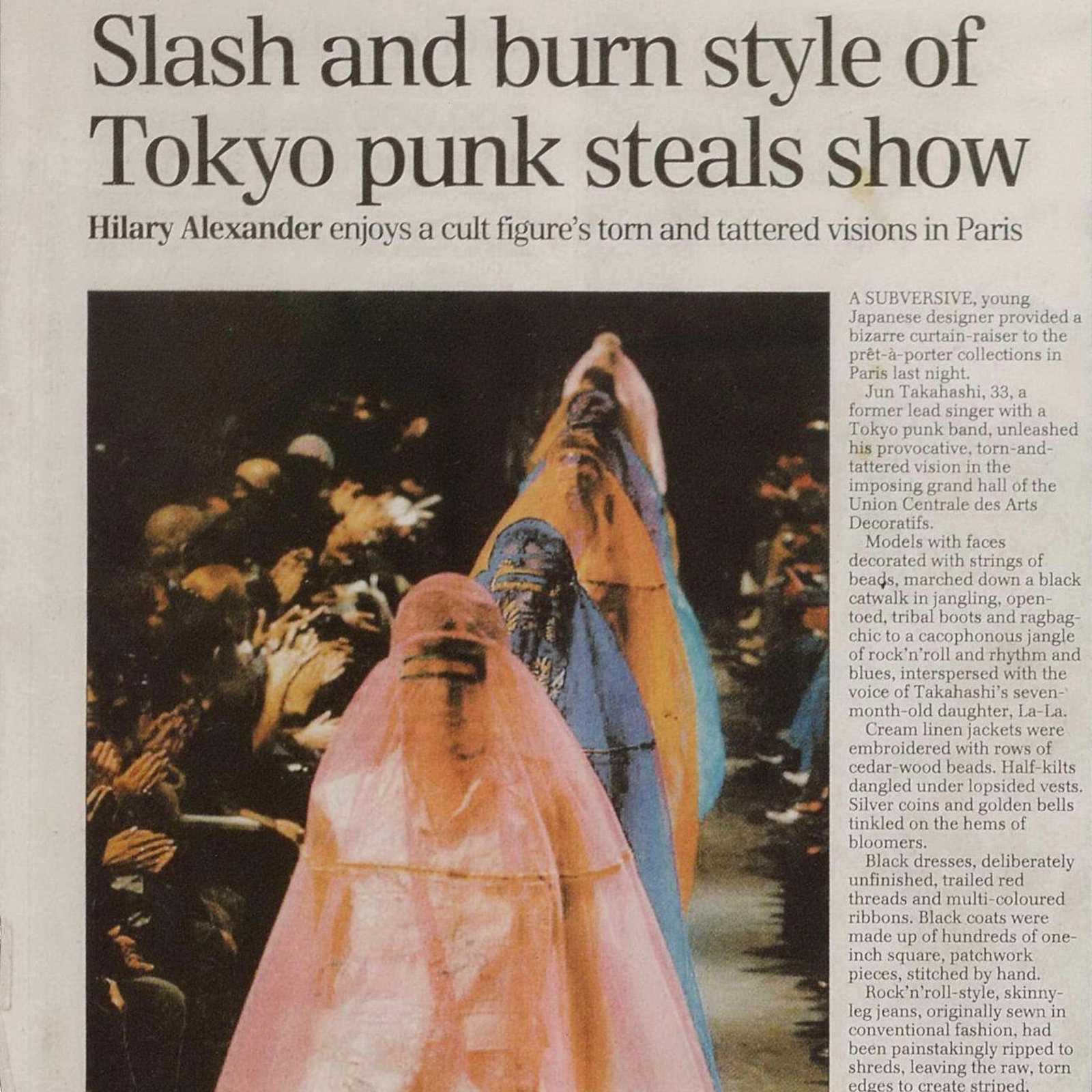
The clothes she described:
- Cream linen jackets embroidered with rows of cedar-wood beads.
- Half-kilts hanging under lopsided vests.
- Bloomers with silver coins and golden bells on the hems.
- Black dresses left deliberately unfinished, trailing red threads and multicoloured ribbons.
- Black coats made of hundreds of one-inch squares of patchwork, stitched by hand.
- Skinny rock'n'roll jeans, sewn in the normal way and then ripped to shreds.
The finale was a line of models in burqas of pink, blue and orange. Coming about a year after the attacks of 11 September 2001, it caught the audience completely off guard. Sarah Mower of Vogue later remembered it as a total surprise, and as a gentle statement rather than an aggressive one.
The clothes were made whole first, then torn apart and rebuilt by hand.
How the clothes were made
The name describes the method. Small patches were stitched one over another until the surface looked like healing skin. Garments were first made complete, then ripped, cut and reworked by hand, so frayed hems and hanging threads are part of the design and not damage.
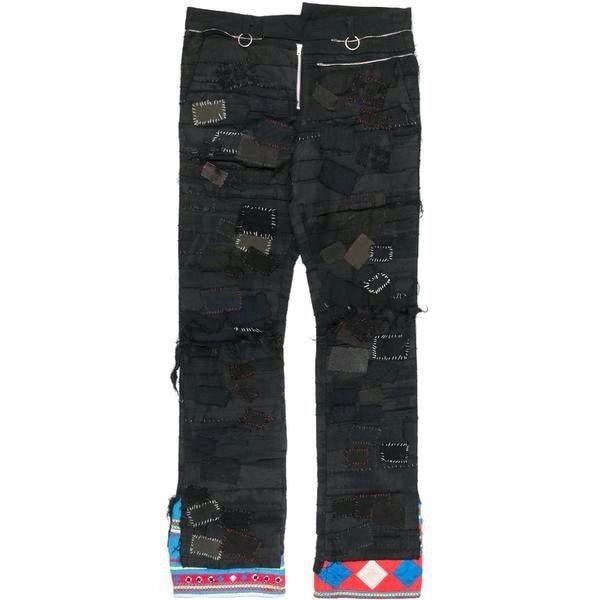
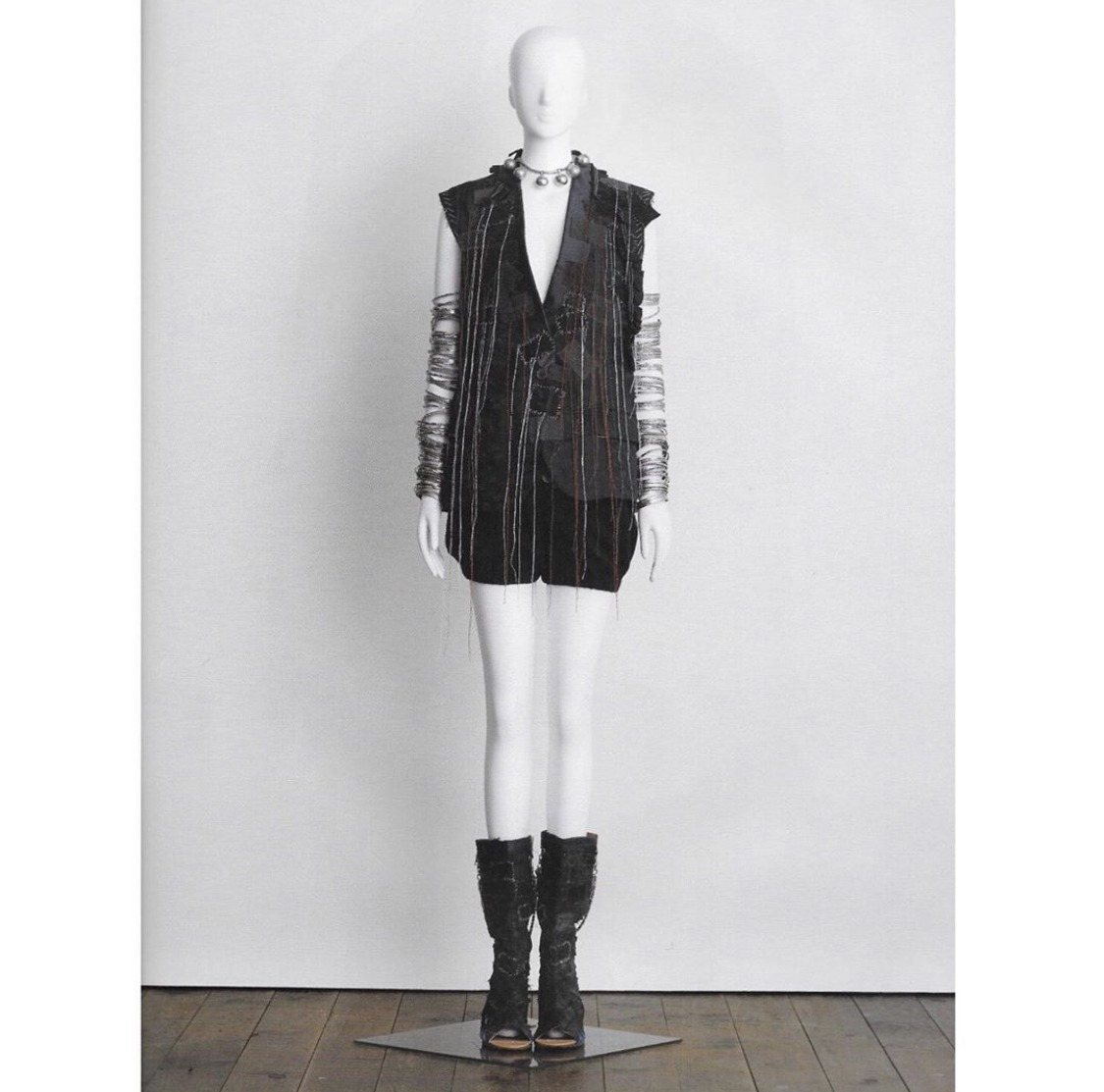
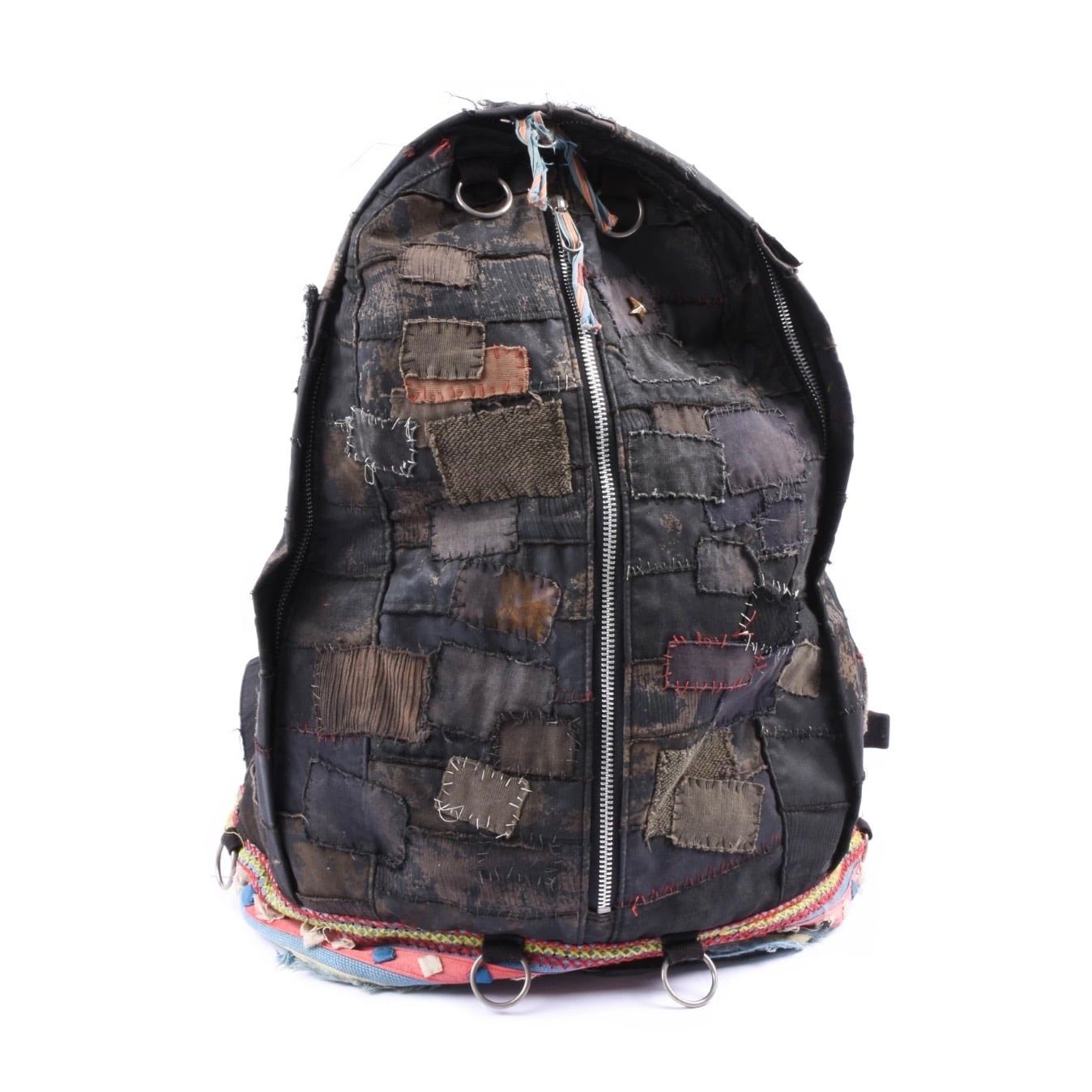
The look came from Japanese crust punk, the scruffy, patched, do-it-yourself side of the hardcore scene Takahashi grew up in, set against ethnic dress, beads and embroidery. Grailed's Dry Clean Only called the slash-and-burn style "now iconic—and highly imitated".
What came after
Scab put Undercover in front of international buyers and the press for the first time. Takahashi moved his shows to Paris for good, apart from a break after the 2011 earthquake in Japan. As Grailed put it, after Scab there was not a fashion editor in Paris who did not know his name.
Finding a Scab piece today
Scab pieces are rare, and many things sold as Scab are something else. Three points to keep in mind:
- The later SCAB label. Undercover went on to use SCAB as a side label for reworked patchwork pieces. A release of hoodies and a backpack went on sale in Undercover's Japanese shops in January 2010, after earlier SCAB bottoms and down vests. These are real Undercover, and good pieces, but they are not the 2003 runway collection.
- Pieces in the spirit of Scab. Patchwork kept coming back in later seasons. Third Looks looked at a pair of hand-patched Undercover jeans and concluded that they borrow details from Scab rather than come from the collection itself.
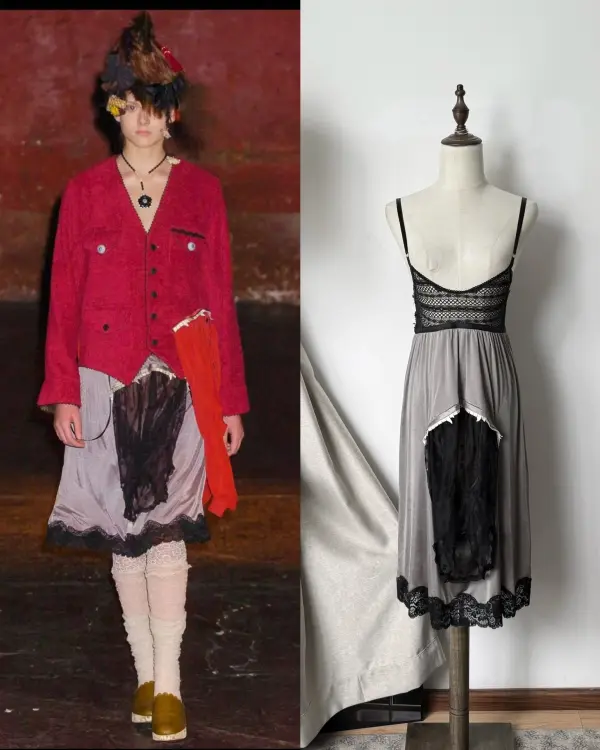
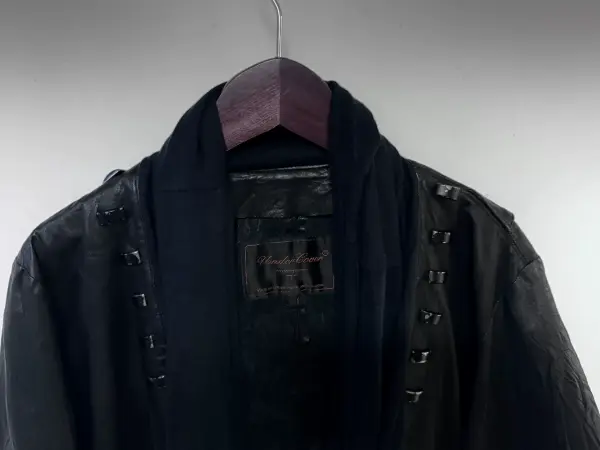
- The season on the piece. Ask the seller for the label and care tag, and compare the piece with photos from the spring/summer 2003 show before paying a Scab price.
If you are chasing a Scab piece, or want a second opinion on one you have found, send us the photos in the chat.
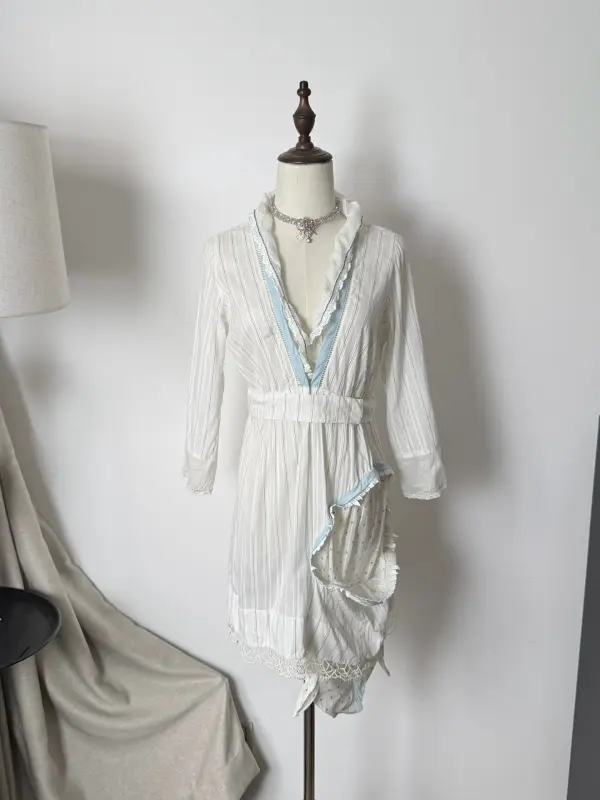
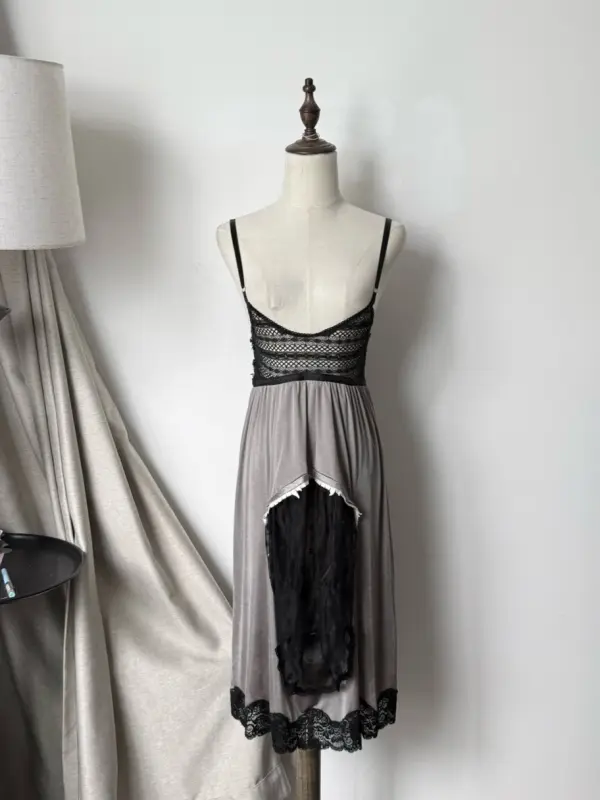
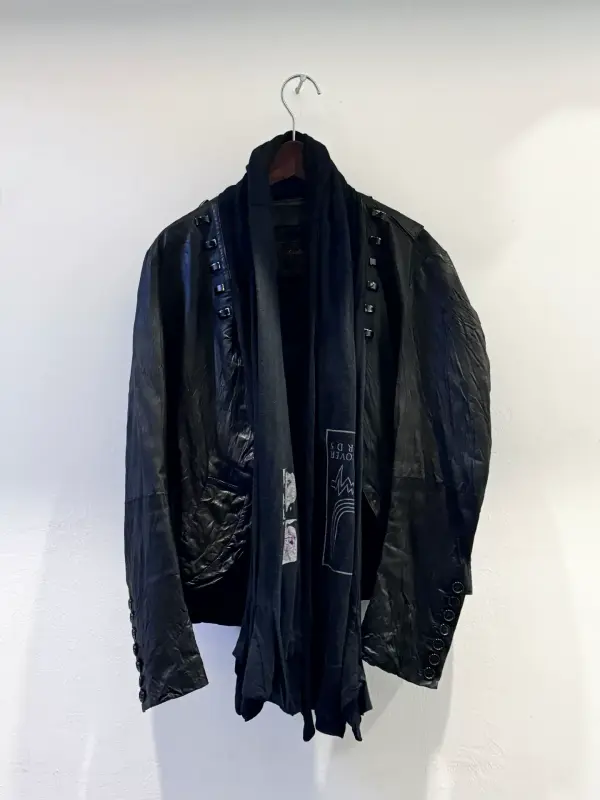
Undercover in the shop now
Sources
- Grailed Dry Clean Only: We make noise, not clothes. A look at Undercover
- Hypebeast: Decoding Undercover, Jun Takahashi's pivotal moments (2016)
- Le Petit Archive: Undercover SS03 Scab, with Hilary Alexander's review of the show
- ARCHIVE.pdf: Undercover SS2003 Scab runway looks
- Hypebeast: Undercover SCAB hoodie and backpack (January 2010)
- Third Looks: Coveted, Undercover SCAB jeans
Last updated 14 November 2026. Spotted a mistake? Tell us.
Keep reading
 Guide Junya Watanabe // 4 min read
Junya Watanabe: history, MAN vs women's and the label
Junya Watanabe explained: from Comme des Garçons pattern cutter to his own label, women's vs MAN, key collections, collaborations and how to read the label.
 Story Dior // 4 min read
Dior Homme jeans: Hedi Slimane's 21, 19 and 17 cm cuts
Dior Homme jeans by Hedi Slimane: what the 21, 19 and 17 cm cuts mean, the seasons from 2003 to 2007, who wore them and how to date a pair from the label.
 Story Number (N)ine // 4 min read
Number (N)ine and Kurt Cobain: the striped mohair sweater
How Kurt Cobain's £35 striped mohair jumper from a Belfast gig became Number (N)ine's AW03 Kurt Cobain sweater, and what Miyashita took from Nirvana.