
The Guidi tannery: how Guidi boots are made
Guidi tanned leather for more than a century before it made a boot. Inside the Pescia tannery, and the method behind the look: build the shoe first, dye it last.
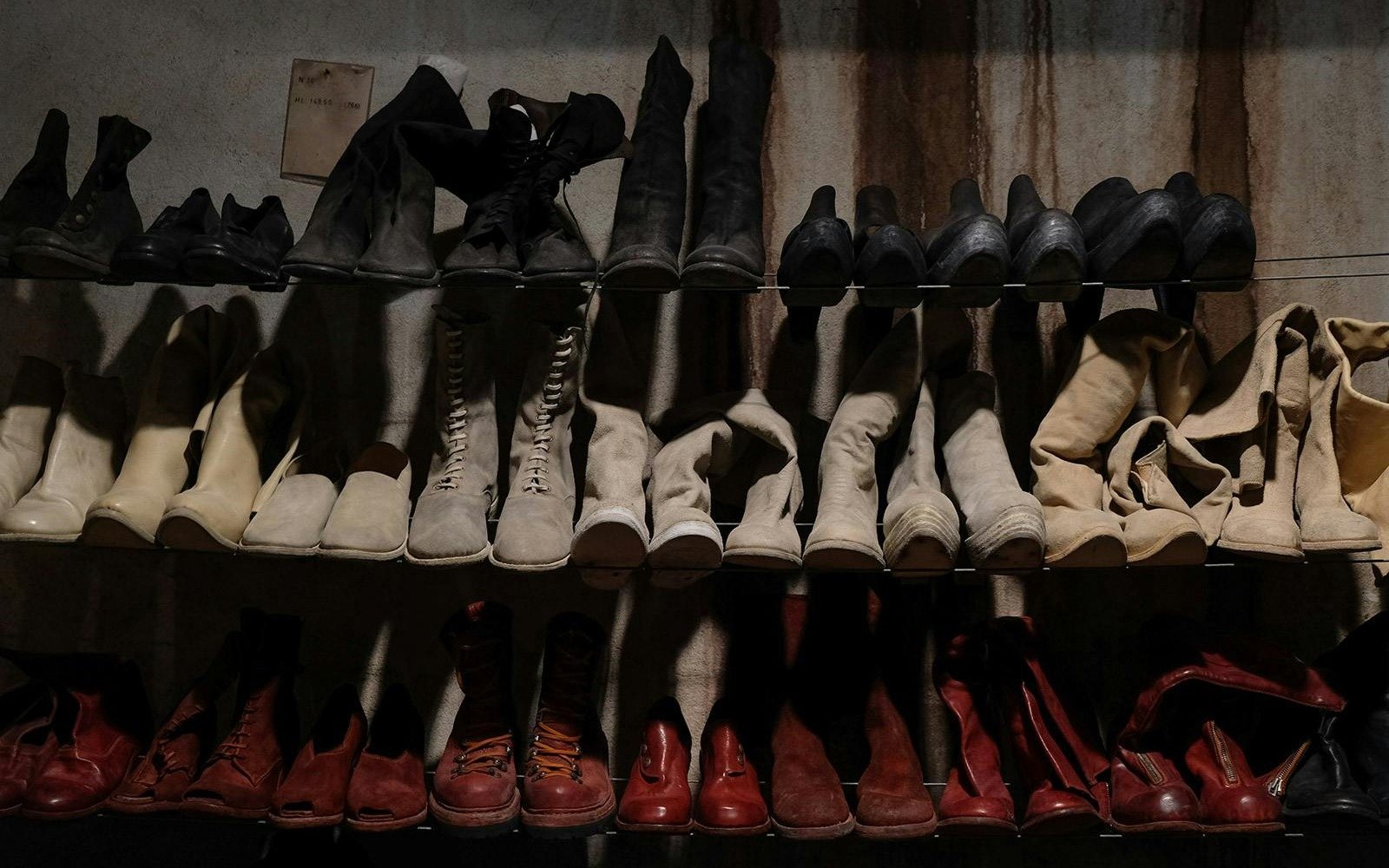
Most shoe brands buy their leather. Guidi started as the place the leather came from. The Guidi tannery in Pescia, in the hills of Tuscany, was tanning hides for more than a hundred years before it made a single boot. This is the story of that tannery, and of the unusual way its shoes are made: built first, dyed last.
A tannery founded in 1896
The tannery began in 1896 as Conceria Guidi Rosellini. Hypebeast names Guido Guidi as its founder. Envoy of Belfast lists three founders: Guido Guidi, Giovanni Rosellini and Gino Ulivo. The company's full name today is Guidi 1896 S.r.l., and Highsnobiety explains that the year is when it started tanning leather.
It is still a family business. It is run by Ruggero Guidi, a direct descendant of the founder, whom, Highsnobiety writes, everyone calls simply "Mr. Guidi". "For generations the Guidi family has managed the tannery with a particular attention to the sustainability of both production and materials," he told Hypebeast in 2020.
For most of its history Guidi sold hides to other people. Highsnobiety reports that the tannery has supplied leather to Prada, Maison Margiela and Rick Owens.
How Guidi tans its leather
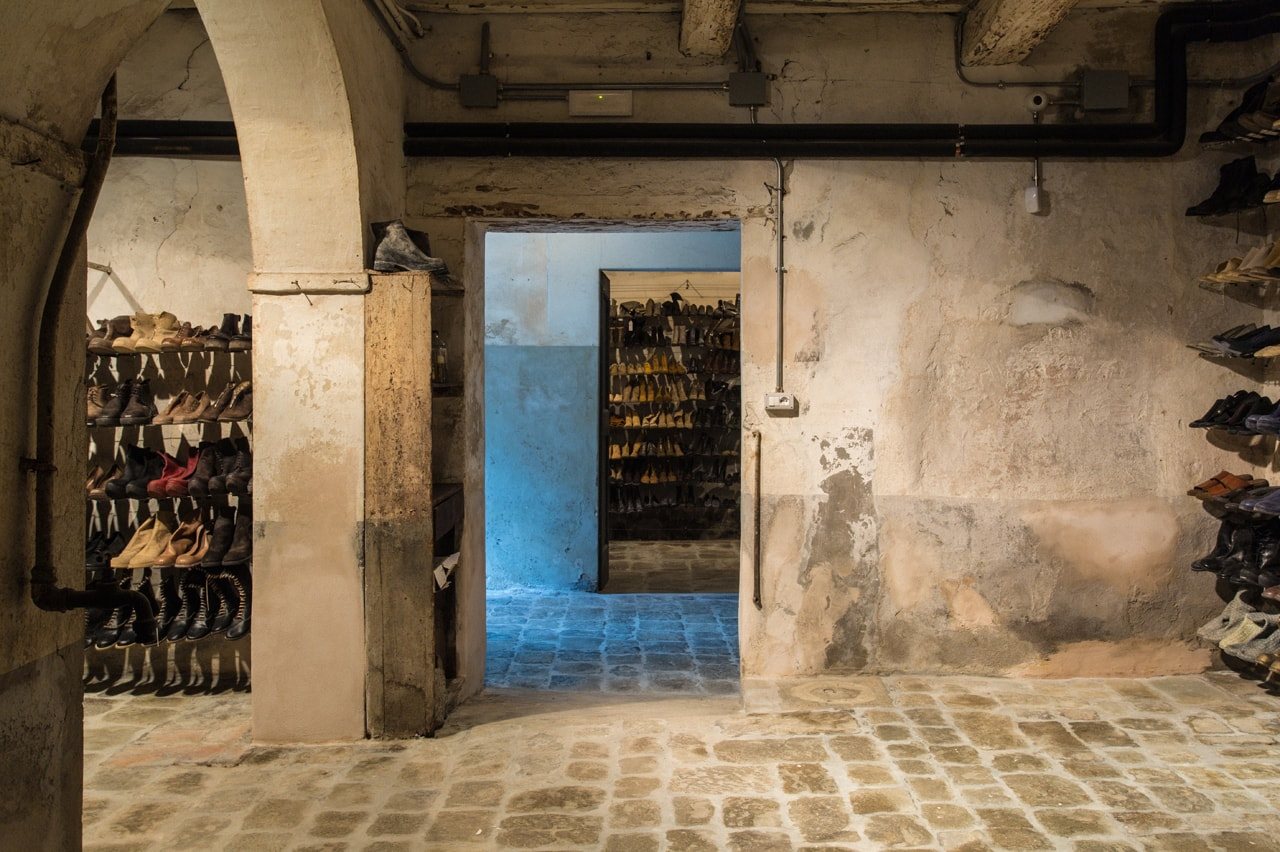
Guidi uses vegetable tanning. Ruggero Guidi calls the exact recipe "a secret", but Hypebeast describes the general process: the hides are rehydrated and cleaned of hair, soaked in tannins from sources such as tree bark and plant galls, moved into large drums to be dyed, and finished with wax and a sealant. How long the hides stay in the tannins and dyes, and how the dyes are mixed, allow what Hypebeast calls "infinite variations".
Vegetable tanning is slower than chrome tanning, the faster industrial method. Hypebeast notes that it "does take significantly longer". There is one exception Highsnobiety found at the tannery: crocodile. "Usually, crocodile is tanned only with chrome, which makes it shiny," says communications manager Michele La Verde. "I think we're the only company that tans crocodile leather with a mix of tan and chrome, giving the leather a matte effect."
The house leather is horse. FORM describes Guidi's horsehide as thick with a burnished surface, and lists kangaroo and reverse calf among the other leathers. UJNG says the early leathers also included buffalo and donkey.
From hides to shoes
The shoes started with a collection. Highsnobiety writes that Mr. Guidi collected old workers' shoes and hiking boots, and wanted to recreate them. He began experimenting around 2003, and Guidi has made its own shoes since 2004.
The person who changed how they looked was Alessia Righi Amante. She had worked for Carpe Diem, the label of Maurizio Altieri and a client of the tannery. "I liked the shoes, but they looked too new, like something people would wear to church on Sunday," she told Highsnobiety. Carpe Diem was known for washing and distressing its clothes, and she advised throwing the shoes into a tanning drum filled with water. Tumbled, they came out soft and worn-looking. She joined Guidi to run sales, and Hypebeast dates her arrival to 2007.
The leather was too good to look new.
Built first, dyed last: object dyeing
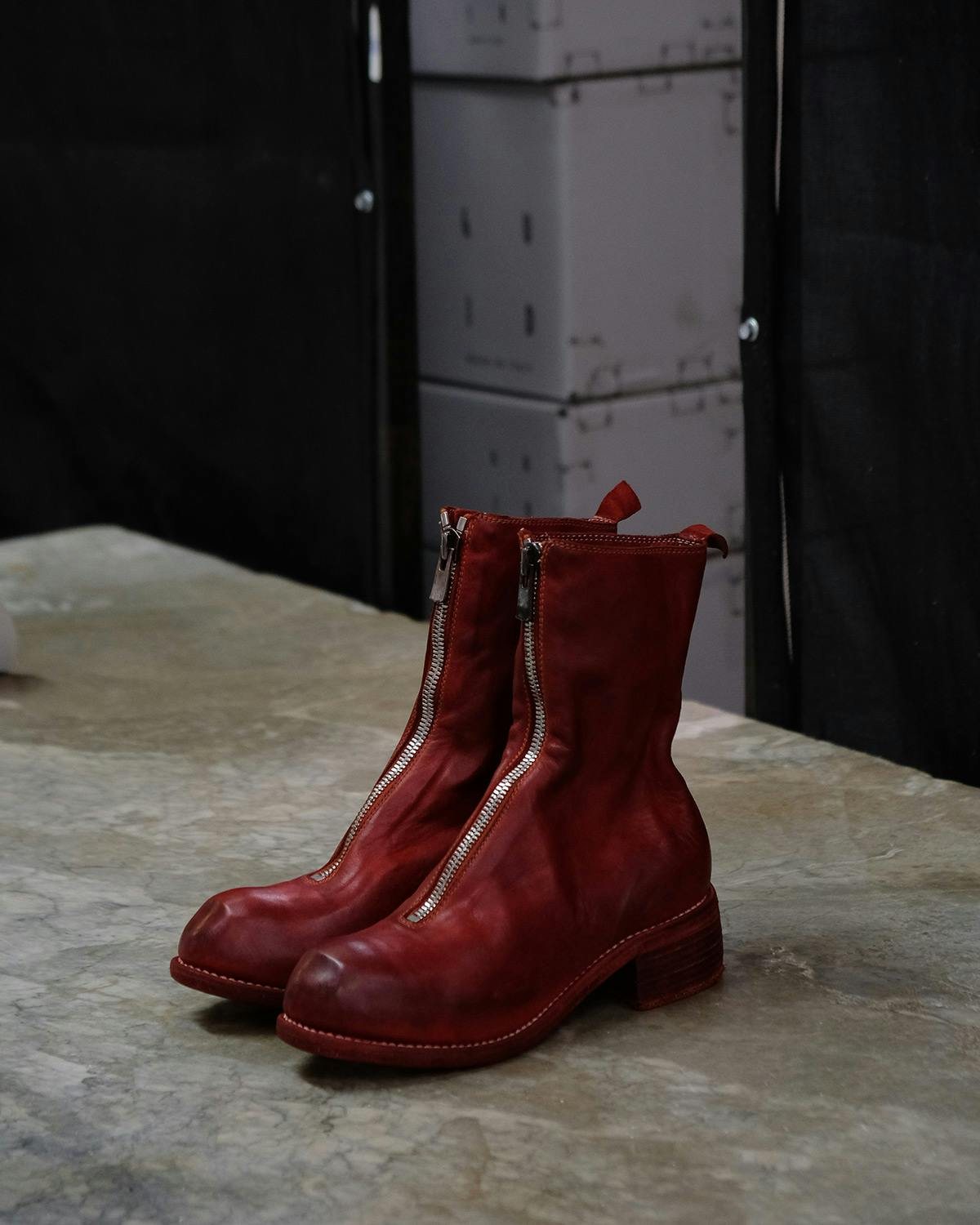
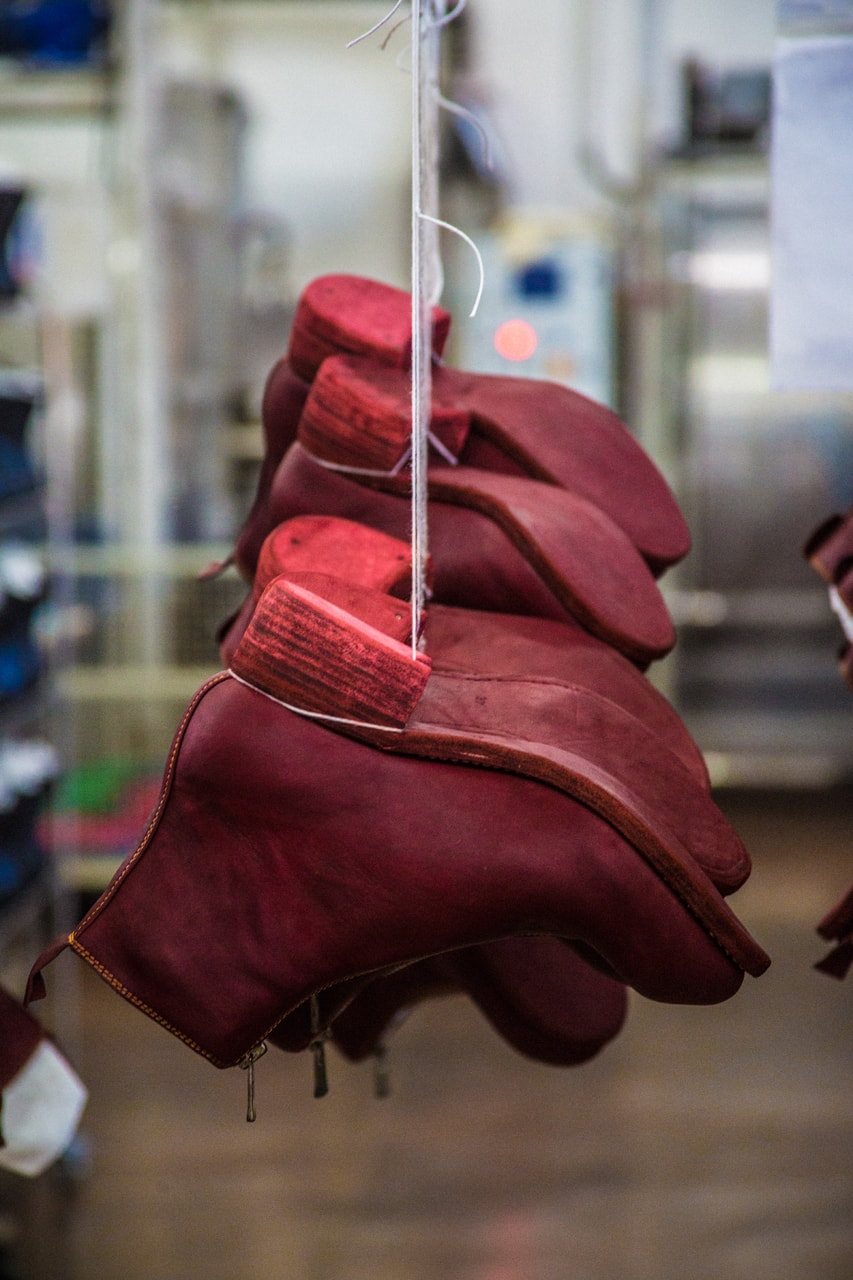
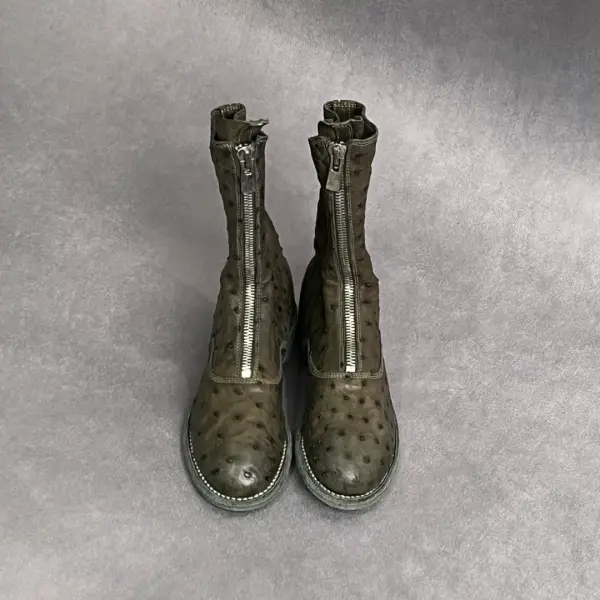
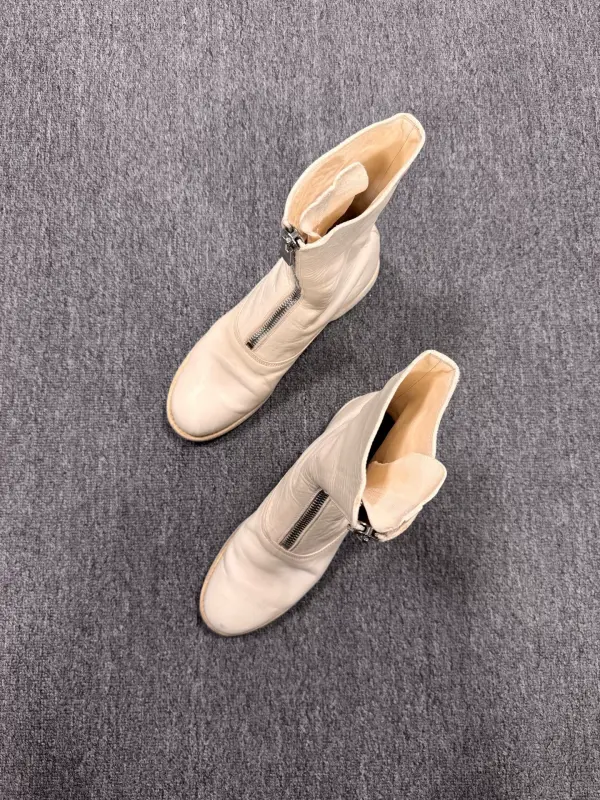
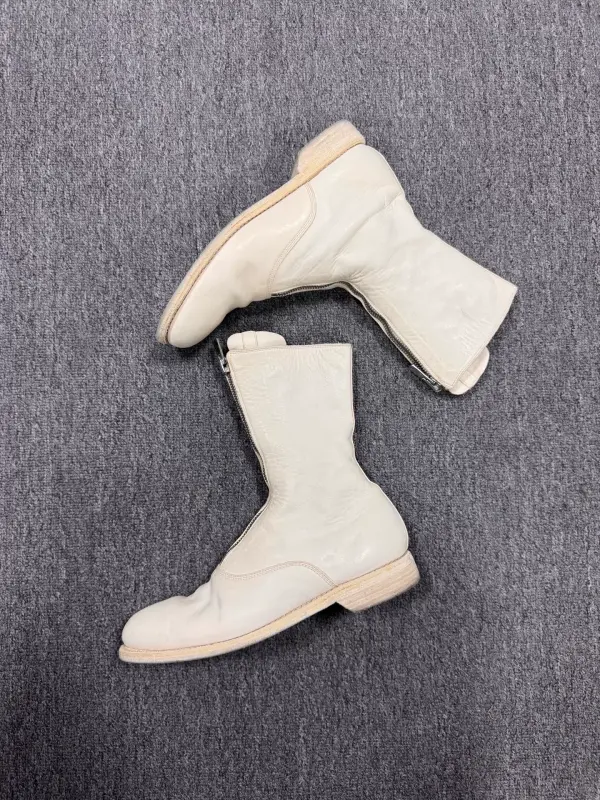
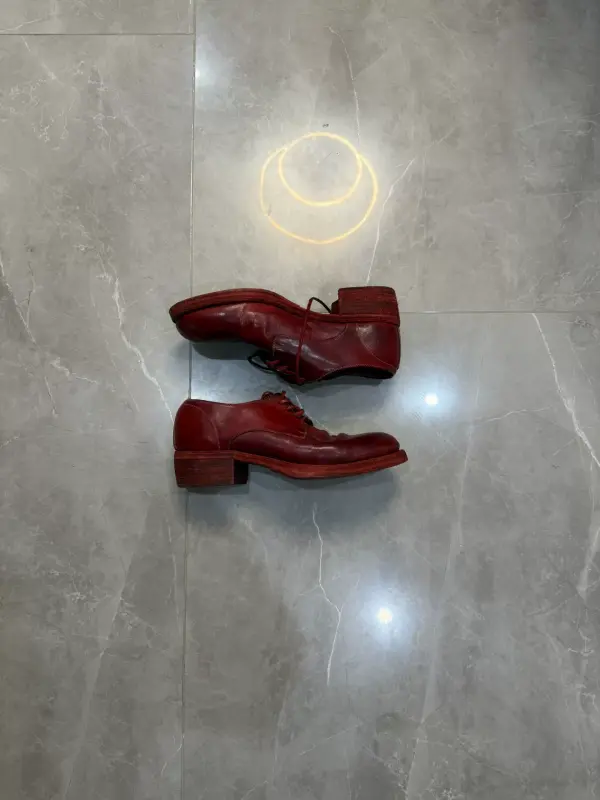
That accident became the method. Most brands dye the leather before they cut it, so the upper and the sole are coloured separately. Guidi does it the other way round. Highsnobiety explains that the shoes are built from leather in one of two base colours, an oil-tanned natural brown or a vegetable-tanned off-white, and only then dyed whole. Upper, lining, welt and stacked heel all take the same colour. Stockists call it object dyeing.
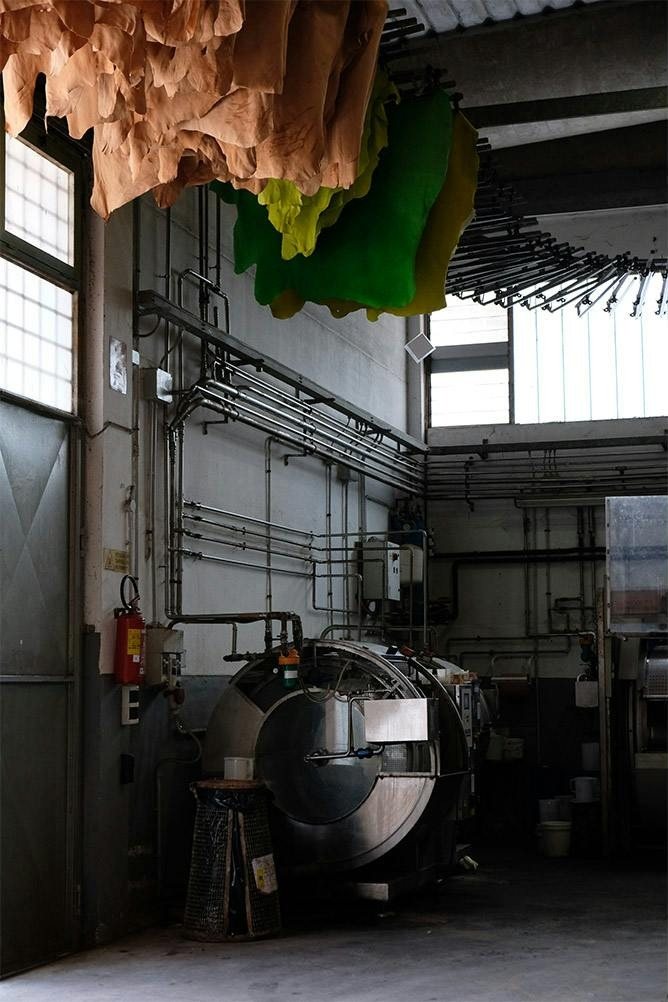
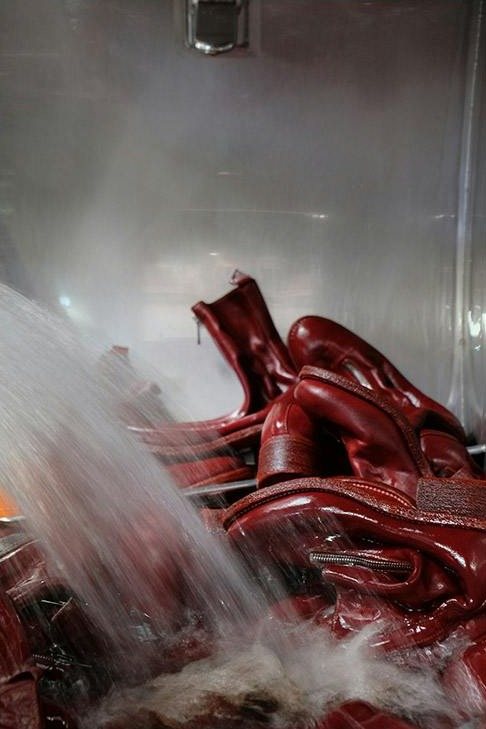
When Highsnobiety visited, a single operator, Mr. Giacomo, mixed, tested and applied the dyes. A batch was about 25 pairs of PL2 boots, and a dye cycle took about 40 minutes; if the colour came out wrong, the batch went through another cycle. "Black is the hardest color to get right," he said. "And different leather types take the dye differently." The shoes then dried for about a week, stuffed with paper, before inspection and packing.
This is also why Guidi sizes vary a little from pair to pair: the leather shrinks unevenly in the drum. Our Guidi sizing guide explains what that means when you choose a size.
Who actually makes Guidi shoes
The tannery does not build the shoes itself. Highsnobiety visited the factory that does, about a ten-minute drive away. It belongs to Paolo Rugiati, whose family has run it for generations; before Guidi it made hiking and mountaineering boots, and today Guidi is its only client. UJNG adds that the shoemaker was a friend of Mr. Guidi's father.
What Highsnobiety saw there:
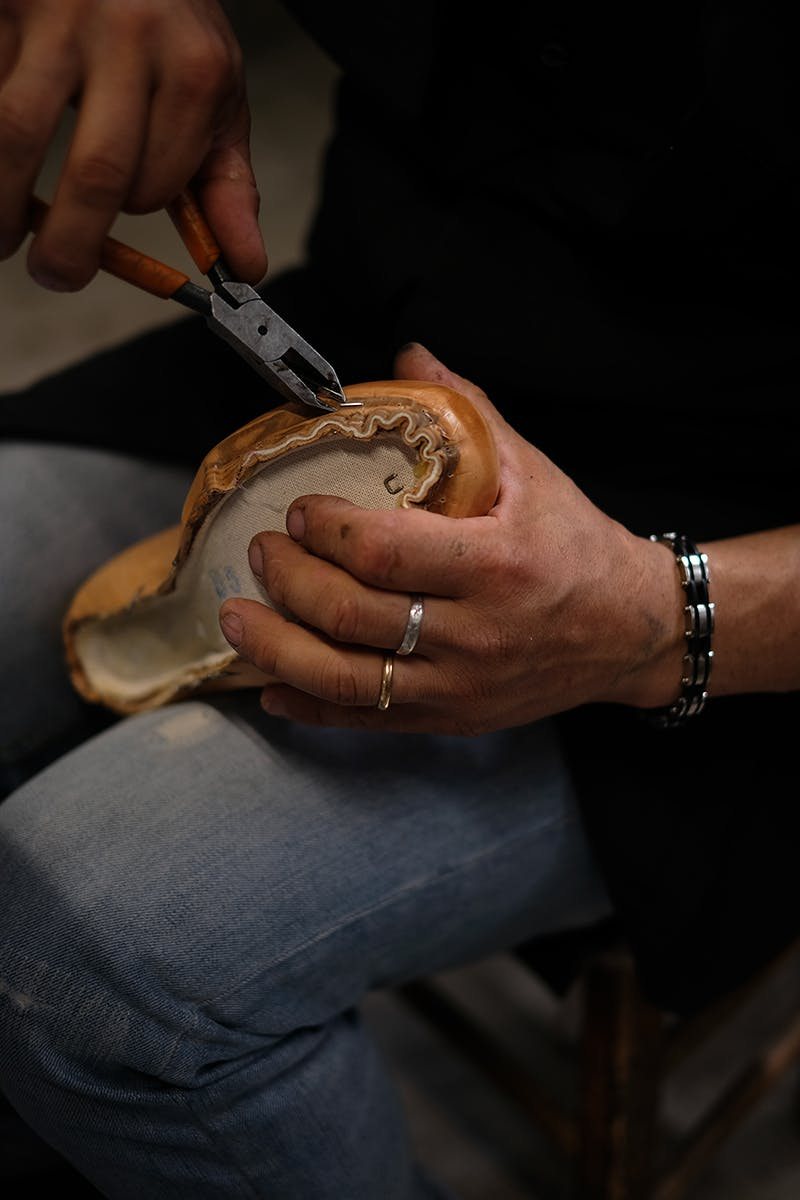
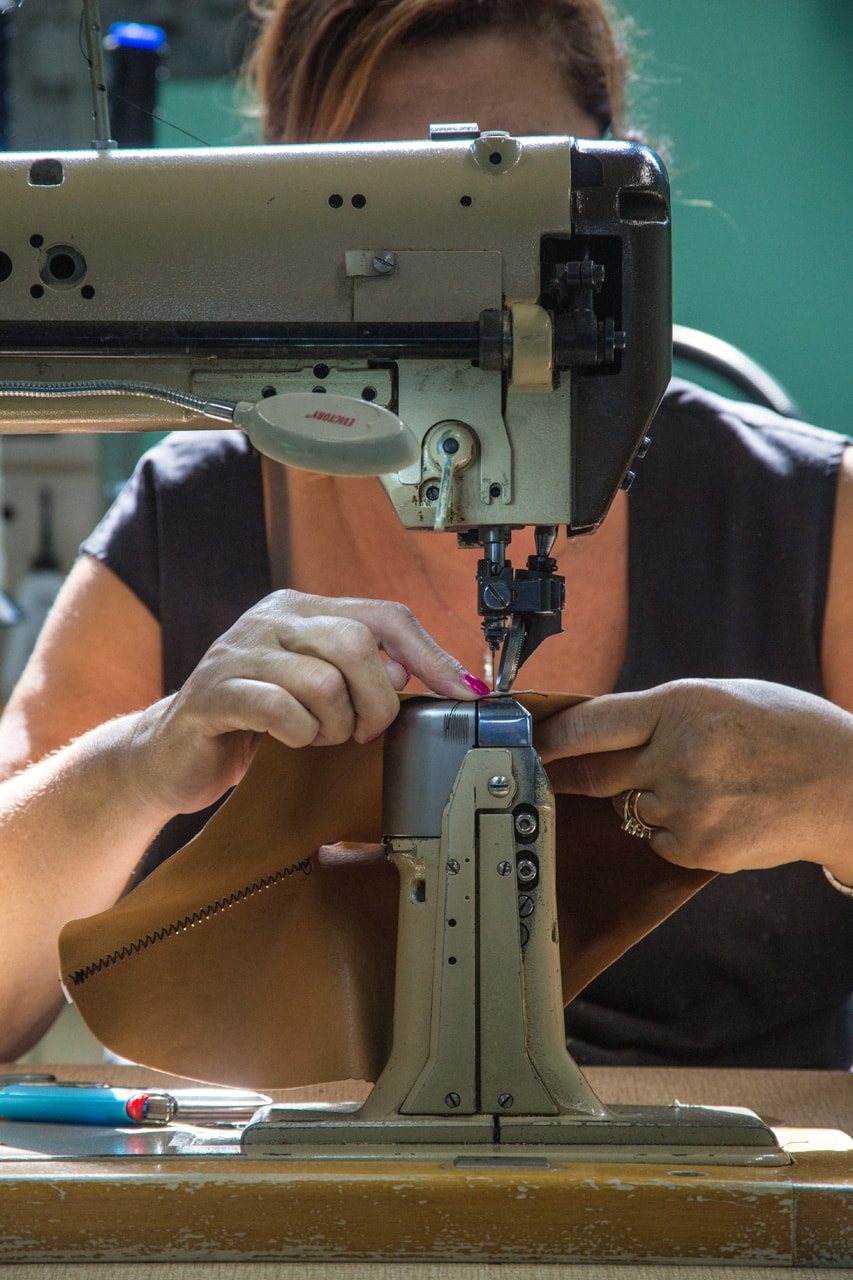
- Cutting by hand. Uppers are cut from horse skin by hand, about 30 seconds each. "Cutting is my favorite part of the process," Rugiati said. "You really have to know how each type of leather behaves."
- About two hours for a PL2, with roughly a dozen pairs of hands working on each boot.
- A Goodyear welt, with cork between the insole and the outsole.
- Stacked leather heels, one of the few parts made by an outside specialist.
- Back to the tannery. Once the edges are sanded and the glue cleaned off, the undyed shoes return to the tannery for dyeing.
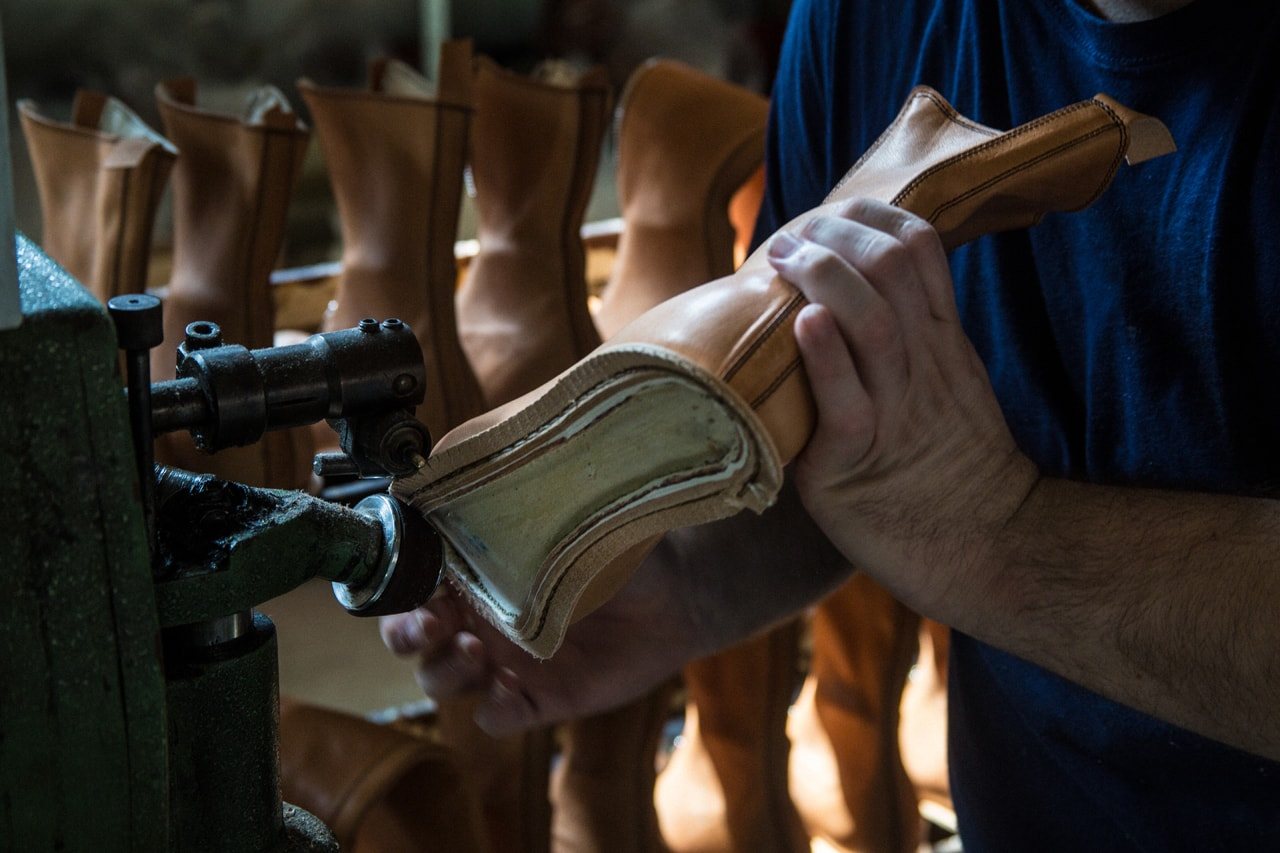
"These kinds of traditional, regular shoes are hard to make in Italy now," Rugiati told Highsnobiety. "All the low- and medium-level factories in Italy have closed and we've lost many jobs."
No logo, no runway
Guidi barely puts its name on anything. Hypebeast notes that the label appears only on the insoles and the shoe boxes. Highsnobiety reported in 2018 that Guidi had no stores of its own and no online shop, sold through about 130 boutiques, and did no traditional advertising.
The customers changed even if the shoes did not. Men were the first market, but by 2018 Highsnobiety put women at about 80 percent of customers, and in 2020 Righi Amante told Hypebeast that women's footwear "now is 70 percent of our market". Through all of it, she said, "We have never, not once, followed trends or the hype of the moment."
Built first, dyed last, signed only on the inside.
What this means for a second-hand pair
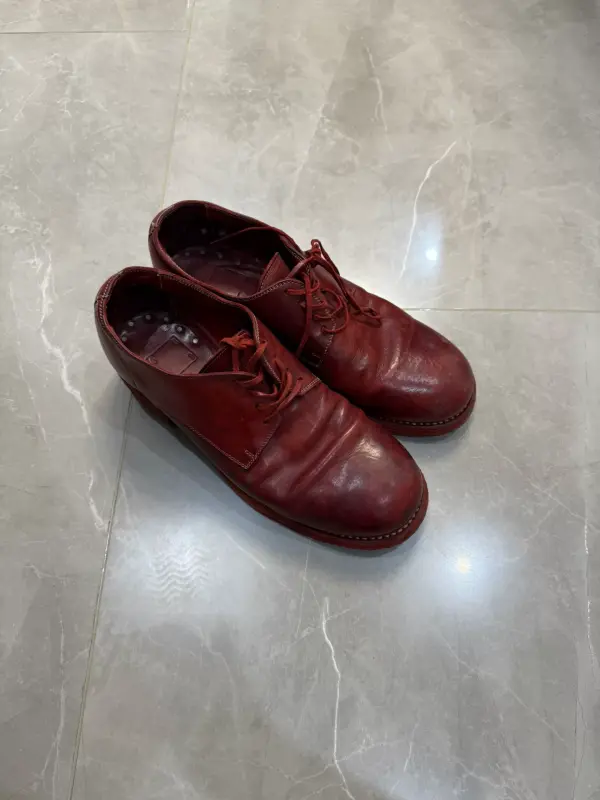
Because each pair is dyed and washed whole, wrinkles, uneven colour and a lived-in look are how Guidi shoes leave the factory, not signs of damage. Highsnobiety also reported in 2018 that each authentic pair came with a QR code to check its origin through the authentication service Certilogo; ask the seller whether it came with that code. For the models and what to check inside them, see our 788Z and PL2 guide.
You can browse the Guidi boots and all Guidi in our shop, and if you have a question about a pair, ask us in the chat.
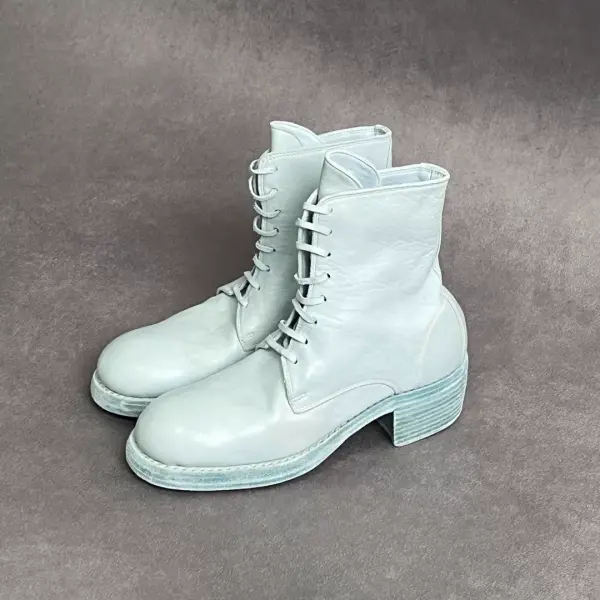
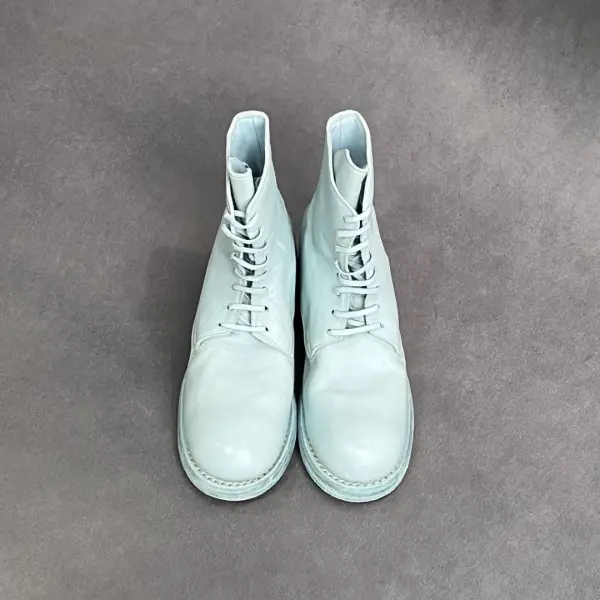
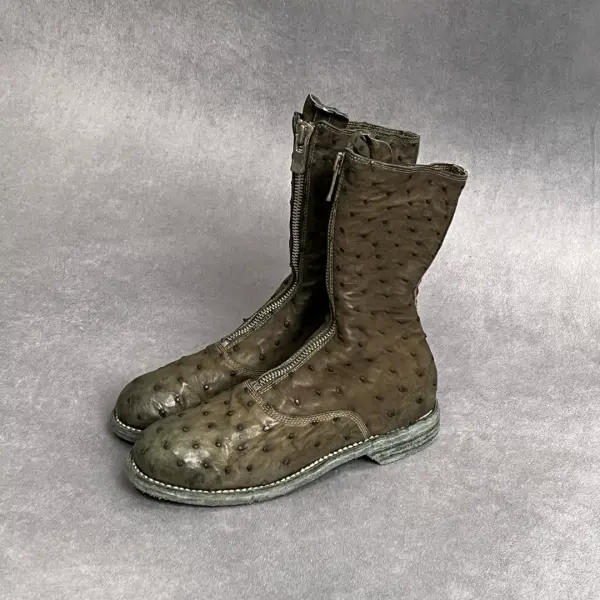
Guidi in the shop now
Sources
- Highsnobiety: The philosophy and the process, how Guidi makes its shoes (Eugene Rabkin, Issue 17)
- Hypebeast: For the love of leather, inside Guidi's artisanal legacy (October 2020)
- FORM: Guidi's legacy of leathercraft (May 2025)
- UJNG: Guidi, adorn me in object dyed leathers
- Orimono: Guidi, Tuscan leather heritage
- Envoy of Belfast: The art of leather tanning
Last updated 15 November 2026. Spotted a mistake? Tell us.
Keep reading
 Guide Junya Watanabe // 4 min read
Junya Watanabe: history, MAN vs women's and the label
Junya Watanabe explained: from Comme des Garçons pattern cutter to his own label, women's vs MAN, key collections, collaborations and how to read the label.
 Story Dior // 4 min read
Dior Homme jeans: Hedi Slimane's 21, 19 and 17 cm cuts
Dior Homme jeans by Hedi Slimane: what the 21, 19 and 17 cm cuts mean, the seasons from 2003 to 2007, who wore them and how to date a pair from the label.
 Story Number (N)ine // 4 min read
Number (N)ine and Kurt Cobain: the striped mohair sweater
How Kurt Cobain's £35 striped mohair jumper from a Belfast gig became Number (N)ine's AW03 Kurt Cobain sweater, and what Miyashita took from Nirvana.